

 English
 中文简体

Why Mechanical Stretch Woven Fabrics Resist Chlorine, Heat and Bagging at Knees
2026-11-09
Why mechanical stretch woven fabrics resist chlorine, heat degradation, and bagging at the knees? The short answer is in their structure. Unlike elastane-based stretch fabrics, mechanical stretch wovens create elasticity through textured yarns and weave geometry. Mechanical stretch woven fabrics are now a practical starting point for garments that must keep their shape after repeated use.
Content
- 1 What Makes Mechanical Stretch Woven Fabrics Different?
- 2 Why Do Mechanical Stretch Woven Fabrics Resist Chlorine?
- 3 How Do Mechanical Stretch Woven Fabrics Handle Heat Degradation?
- 4 Why Do Mechanical Stretch Woven Fabrics Resist Bagging at the Knees?
- 5 Mechanical Stretch vs. Spandex-Based Stretch: A Quick Comparison
- 6 Where Are These Properties Most Valuable?
- 7 How Suzhou Redcolor Builds Long-Lasting Mechanical Stretch Fabrics
- 8 What to Look for When Specifying Mechanical Stretch Fabrics
- 9 Frequently Asked Questions
- 10 Final Thoughts
What Makes Mechanical Stretch Woven Fabrics Different?
Mechanical stretch woven fabrics are made from yarns that have been crimped, coiled, or textured during production. The fabric gains its stretch from the shape of the yarn rather than from a separate elastic fiber. In a woven construction, these textured yarns are interlaced at many points, so when the fabric is pulled, the yarns straighten and then return to their previous position when the force is released.
Because there is no spandex or elastane core, the fabric does not depend on a material that breaks down in chlorinated water, high heat, or repeated stretching. The stable behavior is built into the yarn geometry and the weave structure itself.
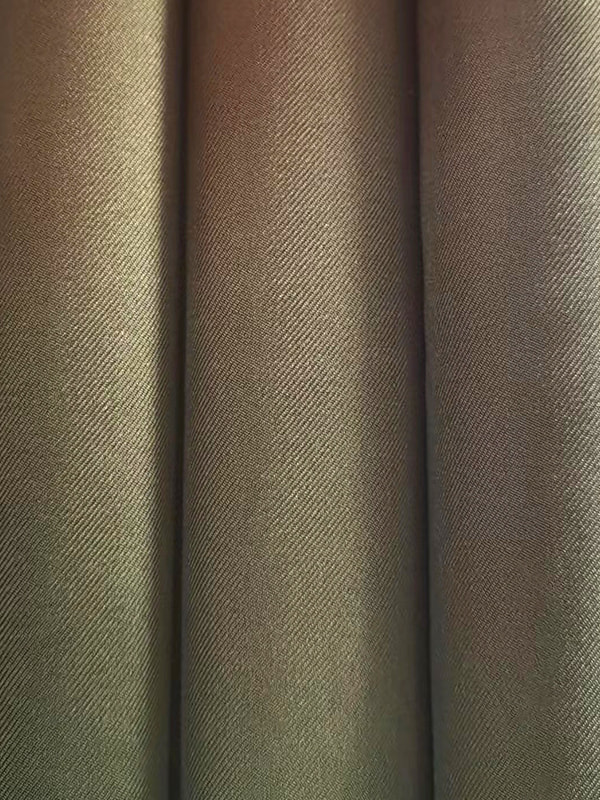 75D 2/2 Twill Mechanical Stretch Fabric for OuterwearThis fabric uses a 2/2 twill weave with mechanical stretch, offering durable elasticity without spandex. Its textured surface and waterproof finish make it suitable for spring and autumn jackets.View Product →
A common construction is the 2/2 twill mechanical stretch weave, which balances surface texture, elasticity, and dimensional stability. This structure is often used for trousers, outdoor garments, and workwear because it feels substantial while still moving with the body.
Why Do Mechanical Stretch Woven Fabrics Resist Chlorine?
Chlorine is one of the toughest environments for elastic fibers. In swimming pools, laundry bleach, and industrial cleaning systems, chlorine can attack the polyurethane segment of spandex. That attack can cause the fiber to turn yellow, lose elasticity, and eventually split. The result is sagging waistbands, stretched knee panels, and a shorter garment lifespan.
Mechanical stretch woven fabrics avoid this problem at the fiber level. Most mechanical stretch styles are built from polyester or cationic polyester yarns. Polyester is inherently more resistant to chlorine and many oxidizing chemicals. Because the yarn itself is the elastic source, there is no secondary elastomer that can be weakened by chlorine. The stretch performance remains stable even after repeated exposure to chlorinated water or chlorine-based sanitizers.
Key insight: If a garment needs to survive chlorine, the safest starting point is a polyester-based mechanical stretch woven fabric that contains no spandex.
This property is especially valuable for swimwear, medical workwear, and uniforms that are laundered in industrial processes.
How Do Mechanical Stretch Woven Fabrics Handle Heat Degradation?
Heat degradation affects stretch fabrics in several ways. Hot washing, tumble drying, ironing, and long exposure to sunlight can cause spandex to lose its recovery. The elastic segments may become brittle, sticky, or discolored, which makes the fabric feel weak and look aged.
Mechanical stretch woven fabrics behave differently. Polyester has a high melting point and can be heat-set during production. The crimp in the yarn is fixed by heat-setting, giving the fabric a stable stretch and recovery value. During normal apparel use, temperatures that would quickly damage spandex are much less harmful to a polyester-based mechanical stretch construction.
This does not mean mechanical stretch fabrics are indestructible. Excessive heat can still affect lamination films or special coatings. But the base fabric is more forgiving. It can withstand higher processing temperatures, and it is less likely to shrink, soften, or lose elasticity after hot wash cycles.
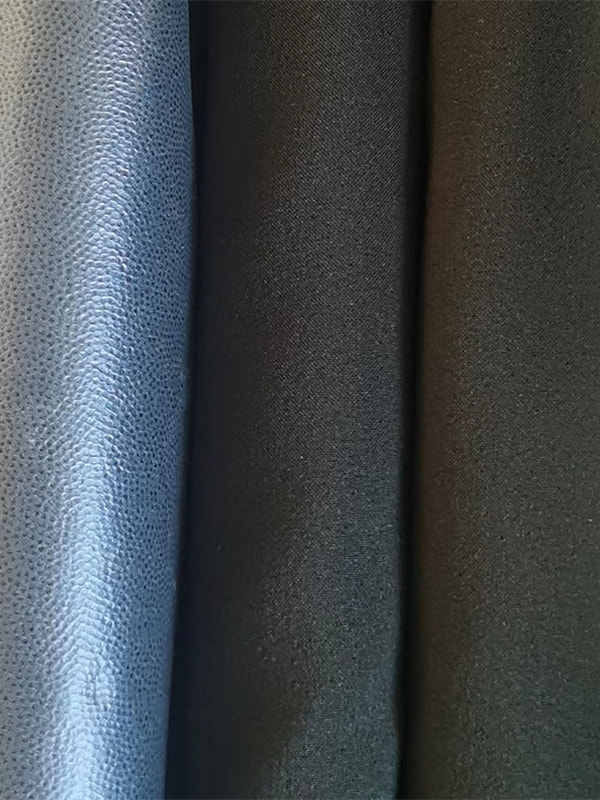 75D Plain Weave Ultra-High Elastic Stretch Fabric with TPU FilmDesigned for lamination, this plain weave fabric combines ultra-high elastic weft with mechanical recovery, supporting a low-transparency TPU layer while resisting heat and shrinkage during processing.View Product →
For applications that require a functional film, such as a low-transparency TPU layer, manufacturers need a stretch base fabric that can be laminated without losing its own mechanical recovery. A 75D plain weave mechanical stretch base with ultra-high elastic weft is one example of a fabric designed to support both stretch and lamination.
Why Do Mechanical Stretch Woven Fabrics Resist Bagging at the Knees?
Bagging at the knees is caused by a combination of stress, yarn slippage, and fiber fatigue. When a person kneels or bends, the fabric is stretched over a small area. If the elastic component becomes exhausted, the fabric stays in a tented shape after standing up. This is particularly noticeable in trousers, work pants, and uniforms.
Mechanical stretch woven fabrics resist bagging because their recovery does not depend on a thin spandex filament. The woven structure interlocks yarns at frequent intervals. When the knee bends, the stress is distributed across many yarn intersections rather than being concentrated on one elastic core. After the stress is removed, the yarn crimp returns to its original configuration.
Compared with spandex blends, mechanical stretch wovens also show lower hysteresis, which is the difference between stretching and recovery. Lower hysteresis means the fabric returns closer to its original dimensions after each movement. Repeated kneeling or sitting causes less permanent deformation.
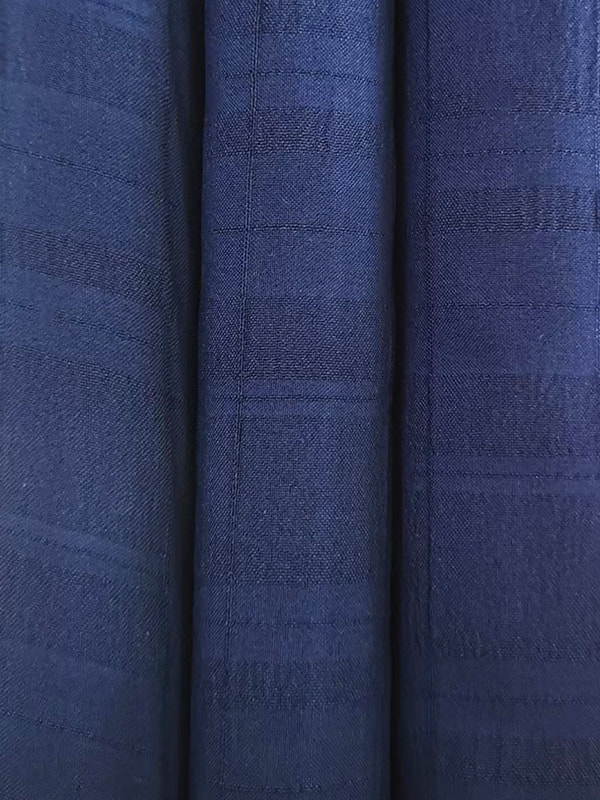 Checkered High-Elastic Mechanical Stretch FabricThe checkered texture in this mechanical stretch fabric provides a stable surface and good recovery, making it ideal for knee-contact garments that require repeated stretching without permanent deformation.View Product →
Fabrics such as checkered high-elastic mechanical stretch styles are often selected for knee-contact garments because the additional yarn texture creates a stable surface while retaining a useful level of stretch.
Mechanical Stretch vs. Spandex-Based Stretch: A Quick Comparison
To understand why mechanical stretch fabrics are a practical answer, it helps to compare them side by side with spandex-based stretch fabrics.
| Factor | Mechanical Stretch Woven | Spandex-Based Stretch |
|---|---|---|
| Elastic source | Textured crimped yarns | Spandex filaments |
| Chlorine resistance | High in polyester versions | Low when spandex degrades |
| Heat tolerance | Stable after heat-setting | Can lose recovery |
| Bagging behavior | Low permanent deformation | Higher bagging risk |
| Long-term wear | Good recovery under repeated use | May fatigue sooner |
This is not a blanket statement that spandex fabrics are always worse. For certain applications, spandex gives a different hand feel and a higher stretch percentage. But for chlorine exposure, heat, and knee bagging, mechanical stretch has clear structural advantages.
Where Are These Properties Most Valuable?
Mechanical stretch woven fabrics are used in many categories when long-term shape control matters.
- Workwear and uniforms: Frequent kneeling, washing, and movement create a need for fabric that can recover from stress without bagging.
- Outdoor and trekking trousers: Heat, sunlight, and repeated movement are real tests for stretch fabric.
- Swimwear and aquatic clothing: Chlorine resistance becomes a clear deciding factor when spandex would fail quickly.
- Functional layers and coated fabrics: Mechanical stretch bases can be laminated for windproof and low-transparency designs.
In all of these cases, the garment is expected to look professional after hours of wear. A fabric that resists chlorine, heat degradation, and knee bagging reduces the quality complaints that appear after multiple wash cycles.
Mechanical stretching also influences tear resistance. Learn more about mechanical stretching and tear resistance to see how process parameters affect fabric durability.
How Suzhou Redcolor Builds Long-Lasting Mechanical Stretch Fabrics
Behind a durable mechanical stretch fabric, there is a supply chain that controls yarn quality, weaving stability, and finishing. Suzhou Redcolor International Trading Co., Ltd. is a manufacturer with spinning, texturizing, weaving, and trading in the same group. The company's experience ranges from fiber processing to finished fabric, which makes it easier to control the yarn properties that determine chlorine resistance and recovery.
The company produces shell and lining materials for sportswear, outdoor clothing, and workwear. Its product range includes four-way stretch, double-weaving, mechanical stretch, T400 stretch, and T800 stretch fabrics. For buyers who need mechanical stretch woven fabrics, the product catalog is an efficient way to compare weave structures, yarn counts, and optional functional finishes.
Manufacturers with dedicated weaving and finishing lines can also test the effect of weave density, yarn crimp, and heat-setting temperature. These variables decide whether a mechanical stretch fabric will still recover after 20, 50, or 100 wash cycles.
What to Look for When Specifying Mechanical Stretch Fabrics
If you are evaluating mechanical stretch woven fabrics for a new product, start with these points:
- Check the fiber composition. Polyester-based mechanical stretch products generally offer better chlorine and heat resistance than nylon-heavy constructions.
- Request stretch and recovery data. The fabric should return to a high percentage of its original length after repeated elongation.
- Ask about heat-setting conditions. Proper heat-setting is what locks the yarn crimp into a stable position.
- Confirm wash-fastness. The resistance to chlorine and heat should still be acceptable after multiple laundry cycles.
In addition, consider the end use. A mechanical stretch fabric that works well for work trousers may be different from one designed for laminated outdoor shells. The weave density, yarn fineness, and optional membrane should all be matched to the garment's real stress points.
Frequently Asked Questions
Q1: Are mechanical stretch woven fabrics as stretchy as spandex fabrics?
They can provide a moderate and controlled stretch. The exact percentage depends on yarn type, weave structure, and finishing. For knee movement zones, recovery behavior usually matters more than maximum stretch.
Q2: Can I wash mechanical stretch woven fabrics with chlorine bleach?
Polyester-based versions are more compatible with chlorine than spandex-based versions. Even so, no fabric should be exposed to aggressive bleach unless the supplier confirms that the finish is compatible.
Q3: Do mechanical stretch fabrics feel stiff?
Not necessarily. Modern mechanical stretch fabrics can be finished soft, brushed, or laminated while retaining their elastic response. The initial hand feel is determined by the yarn count and finishing process.
Final Thoughts
Chlorine resistance, heat tolerance, and resistance to knee bagging are not separate features. They all come from the same engineering principle: no spandex, controlled yarn crimp, and a stable woven structure. For buyers who need performance that lasts, mechanical stretch woven fabrics offer a reliable and lower-maintenance answer.
Contact Us for More Details
Don't hesitate to contact when you need us!

Product Categories
Contact Information
-
NO.1 Huanhu Road(Building I)Pingwang, Wu Jiang, Suzhou, Jiangsu, China
-
+86-13962557213
-
+86-512-80739991-801
-
+86-512-80739990
