
 English
 中文简体

How Stretch Double Weaves Eliminate Separate Linings in Lightweight Outerwear
2026-10-26
Modern lightweight outerwear has a hidden challenge: how to stay comfortable without adding bulk. A separate lining can create warmth and a smooth interior, but it also adds weight, sewing steps, and potential fit issues. Stretch double weave changes this equation by constructing the shell and the lining function in one fabric. Instead of joining two layers in the garment factory, the fabric itself becomes the complete outerwear system.
Content
- 1 What Are Stretch Double Weaves?
- 2 Why Double Weave Construction Removes the Need for a Separate Lining
- 3 Key Benefits of Stretch Double Weaves for Lightweight Outerwear
- 4 Performance Comparison: Separate Lining vs Stretch Double Weave
- 5 Where Stretch Double Weaves Shine in Lightweight Outerwear
- 6 Sustainability and Production Advantages
- 7 Frequently Asked Questions
What Are Stretch Double Weaves?
A stretch double weave is a woven textile produced with two interconnected layers: a face layer designed for the outer exposure and a reverse layer engineered to sit next to the wearer or to serve as an insulating inner plane. The two layers are formed simultaneously on the loom, with binding points or interchanging yarns holding them together. When stretch yarns such as T400, T800, or mechanically elastic synthetic filaments are added, the fabric gains elasticity in one, two, or four directions.
This construction is not a bonded laminate and it is not a heavy classic coating. The face and back are separate but connected by design, which is why the fabric behaves like a lined material even though it is a single textile. In lightweight outerwear, manufacturers can select a double weave with a smooth, tightly woven face and a brushed or textured reverse. The reverse picks up the role of a lining without being cut, sewn, or attached later.
Stretch Mechanisms in Double Weaves
The stretch behavior comes from the yarn system, not from a stretch coating. Some constructions use T400 or T800 yarns, which provide elastic recovery through their special filament geometry. Others use mechanical stretch weaving, where the loom creates high yarn crimp and stretch without spandex. Four-way stretch versions add elasticity in both warp and weft directions.
- T400/T800: high resilience and shape recovery for active jackets.
- Mechanical stretch: spandex-free elasticity, useful for recyclable garment platforms.
- Four-way stretch: multi-directional movement for cycling, climbing, and everyday layering.
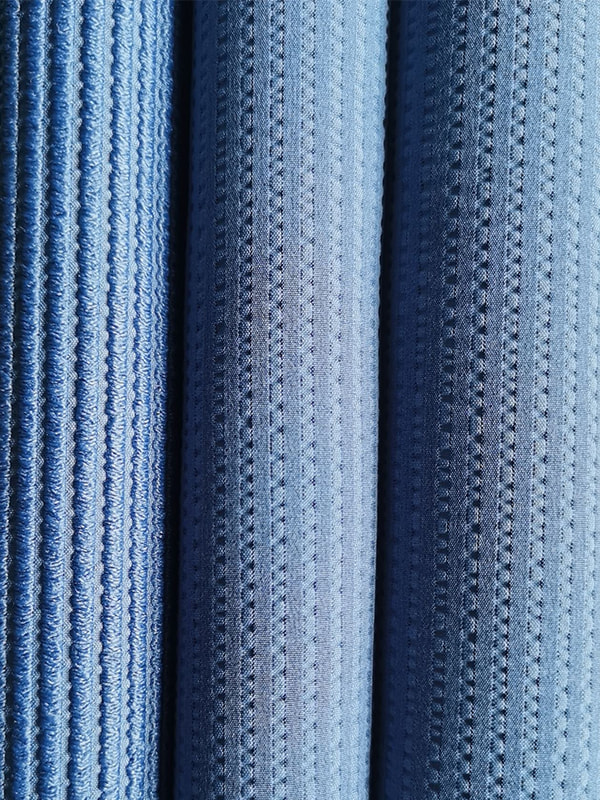
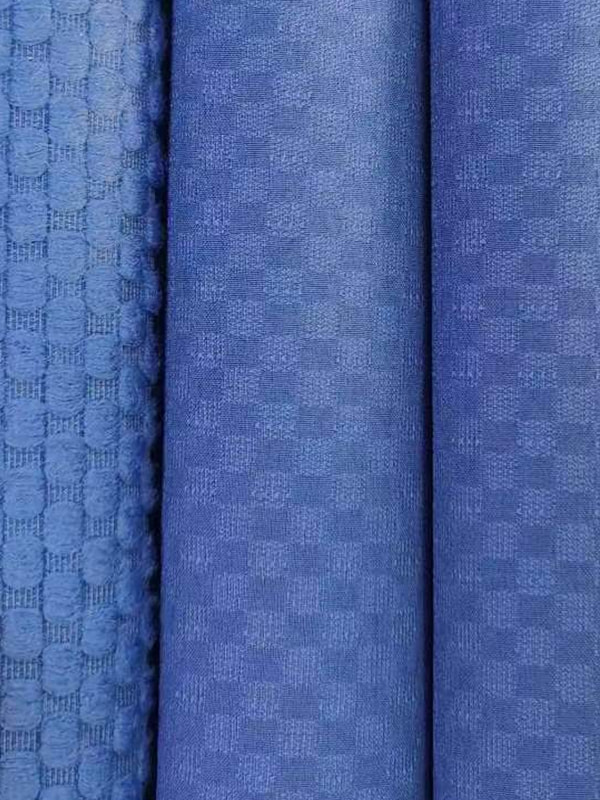 75D/300D Four-Way Stretch Mountaineering Brushed ClothThis brushed fabric offers four-way stretch and a 0.35 square construction, making it suitable for active mountaineering wear. Its elastic recovery comes from yarn geometry, supporting movement and compact packability.View Product →
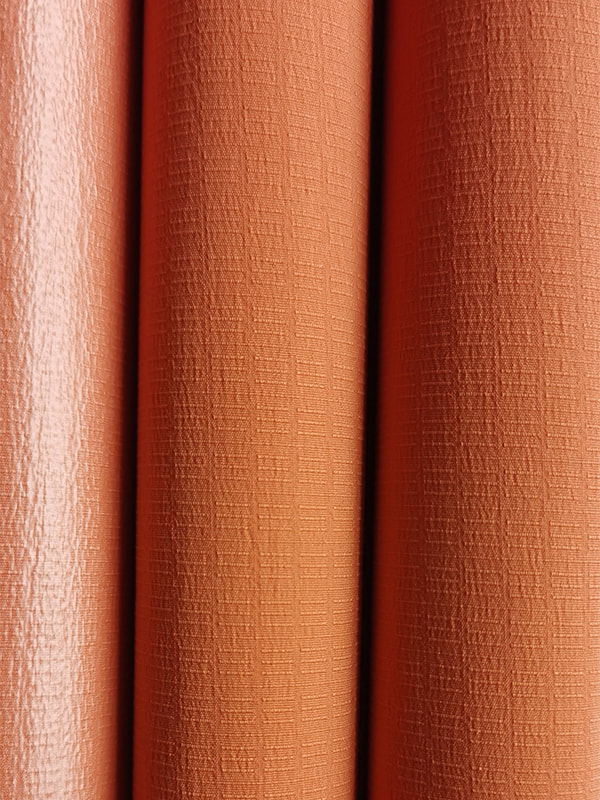
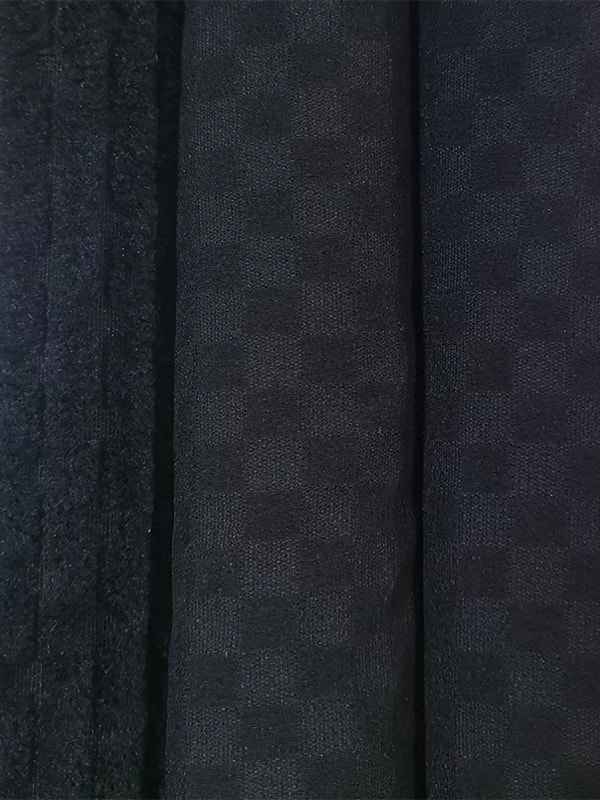
Many functional mills now offer ready-to-order constructions such as 75D/300D four-way stretch 35-square mountaineering brushed cloth, double weaves with rectangular grid textures, and double-layer versions of low-transparency TPU-coated shells. The product range goes beyond a standard shell fabric: it includes brushed back surfaces, air-layer variants, and four-way stretch bases that support both active movement and compact packability.
Why Double Weave Construction Removes the Need for a Separate Lining
In a conventional lightweight outerwear garment, the shell fabric and the lining are separate textiles. The lining is cut, sewn at the hem and cuffs, and sometimes loosely attached at shoulder and side seams. That process consumes time and material, and it creates points where the lining can shift, wrinkle, or tear. A stretch double weave removes those failure points entirely.
Because the reverse layer is already woven as part of the same textile, there is no need to select, cut, and sew an extra lining. The back side can be brushed for a softer touch, woven with channels for insulation, or finished with a low-friction texture that lets the jacket slide over a base layer. The result is a garment that still feels lined but contains fewer layers, fewer seams, and less weight.
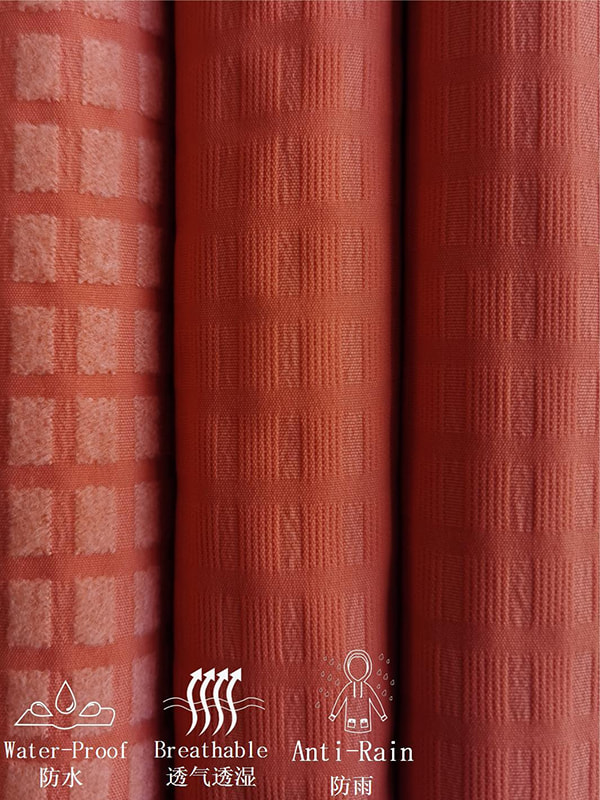 150D Large Square T800 Brushed Double Weave FabricThis double weave with a large square texture integrates a lining layer into the shell, reducing bulk and seams. The brushed reverse provides a soft feel, ideal for lightweight outerwear that drapes well.View Product →
For lightweight outerwear, the integrated structure also improves drape and fit. Independent linings can create a tent effect or restrict movement when the outer layer stretches. With a stretch double weave, the outer face and inner face move together as one elastic unit, which keeps the garment close to the body without pulling or sagging.
Key Benefits of Stretch Double Weaves for Lightweight Outerwear
Stretch double weaves support a wide range of performance goals without sacrificing the clean look of a lightweight jacket. The main advantages are:
- Weight reduction: Removing a separate lining reduces material mass and simplifies the garment. As double-layer weaving technology can cut the weight of traditional mountaineering suits by up to 30 percent, the lightweight potential is meaningful.
- Freedom of movement: Stretch double weaves work with T400, T800, and four-way stretch constructions, so the lined fabric can flex with the body rather than fight it.
- Thermal comfort: The two-layer structure traps air between the face and reverse planes, adding warmth while the reverse back can be brushed or fleece-like for contact comfort.
- Moisture management: Different yarns can be used on each face. A moisture-moving or quick-drying reverse can support the body’s natural temperature regulation in active outerwear.
- Simplified construction: Garment factories save cutting, handling, sewing, and quality-control steps because there is no separate lining fabric to manage.
- Long-term durability: Since the two layers are connected by the weave, the inner layer will not slide out of place, bunch up, or develop lining tears at stress points.
These benefits are especially relevant when the goal is a packable jacket that still offers a premium interior finish. A stretch double weave can deliver the structure of a shell and the comfort of a lining in a single fabric pass.
Performance Comparison: Separate Lining vs Stretch Double Weave
Every design decision involves trade-offs. The comparison below shows why stretch double weaves are becoming a preferred solution for lightweight outerwear brands.
| Performance Factor | Conventional Shell + Separate Lining | Stretch Double Weave |
|---|---|---|
| Weight | Adds lining weight and lining-related trims | One integrated textile; lower total mass |
| Layering | Shell and lining are cut and sewn separately | Face and reverse are woven together |
| Stretch & recovery | Lining may limit shell elasticity | Stretch yarns act across both layers |
| Breathability | Dependent on shell and lining combination | Engineered gap and yarn choice control airflow |
| Construction Time | Higher labor cost and more production steps | Fewer assembly steps and faster production |
| Durability | Lining seams can shift or fray | Layers stay connected by weave structure |
| Sustainability | More material types and offcuts to manage | Fewer inputs and more recyclable monomaterial options |
Where Stretch Double Weaves Shine in Lightweight Outerwear
Lightweight outerwear covers many categories: running jackets, cycling shells, windbreakers, softshells, travel blazers, and compact mountaineering jackets. Stretch double weaves are especially valuable when the garment has to be packed into a small space, used in changeable weather, or worn continuously through a wide range of motion.
For mountaineering apparel, the integrated lining eliminates the need for a fragile, slippery inner fabric that can cause the garment to catch on mid-layers. On a bike or trail, the smooth reverse of a stretch double weave keeps the jacket close to a base layer without binding. In a casual city jacket, the lining function can be delivered with a soft brushed back that feels pleasant against a shirt.
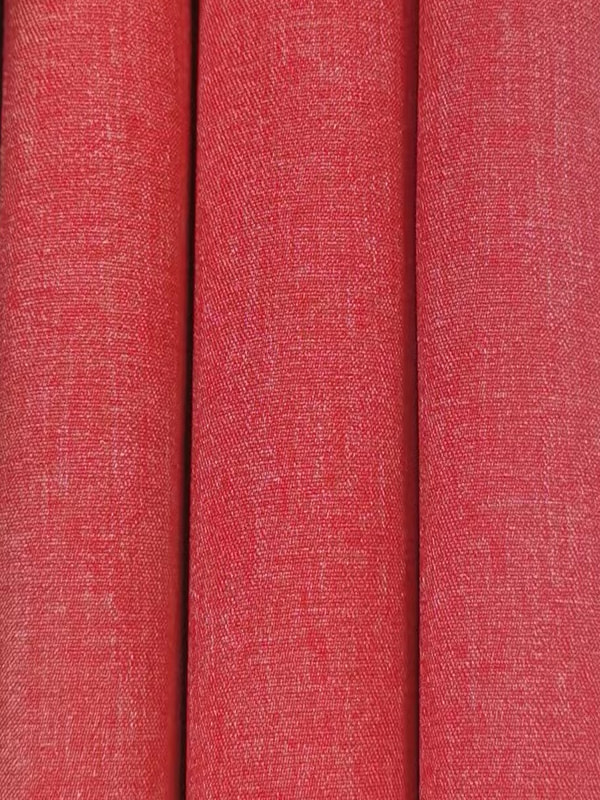
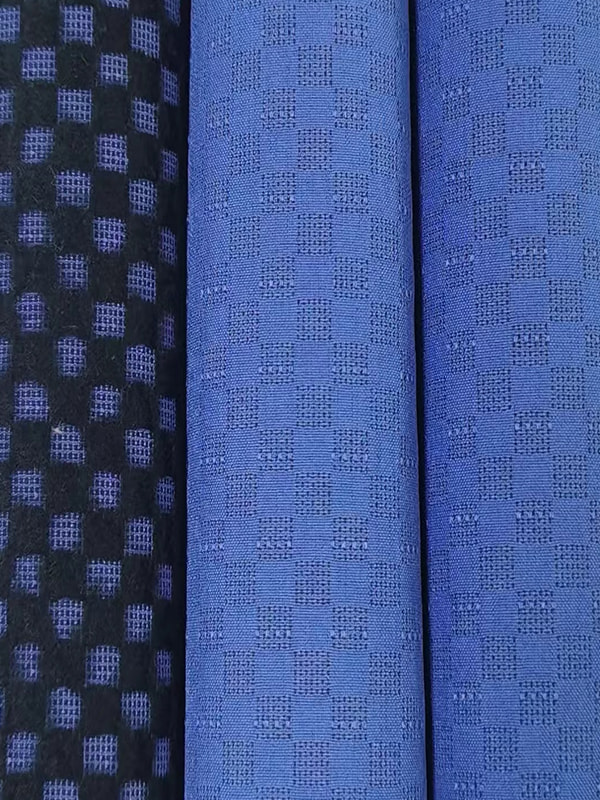 75D/100D Cationic Brushed Waterproof Four-Way Stretch FabricWoven with cationic yarns for a two-tone effect, this four-way stretch double weave has a brushed reverse and waterproof finish. It suits spring and autumn jackets, blending style with performance.View Product →
Because the construction can be adapted in terms of yarn count, face texture, and back finishing, stretch double weaves are not limited to sportswear. They also give designers a clean way to create outerwear that looks minimal and unstructured while retaining the functional qualities of a lined garment.
Sustainability and Production Advantages
Eliminating a separate lining is more than a comfort upgrade; it is also a material-efficiency improvement. Fewer fabrics, fewer seams, and fewer cutting offcuts can reduce both waste and supply-chain complexity. When the outerwear shell can be woven from a single polymer base, the garment is easier to recycle at the end of its life.
From a manufacturing perspective, the approach fits well with a vertically integrated textile supplier. Suzhou Redcolor International Trading Co., Ltd., based in China, combines spinning, draw texturing, weaving, and trading under one management structure. Its production bases in Wujiang and Siyang support annual output of about 60 million meters of functional fabrics. Products are developed through sample testing, garment validation, and trend color matching, and the company holds OEKO-TEX Standard 100 and GRS certifications for verified recycled material traceability.
For a brand, working with this type of supplier shortens the development cycle for lightweight outerwear. The fabric supplier can validate the lining behavior of the reverse face during the weaving stage, so the garment pattern can be developed directly from the double weave fabric without waiting for a lining supplier to deliver and approve a color-matched inner layer.
Frequently Asked Questions
Q1: Does a stretch double weave feel like a lined garment?
Yes, if the reverse layer is engineered for comfort. Brushed finishes, soft-touch yarns, and the natural separation between layers give the interior a lined sensation. The key difference is that the lining behavior is part of the weave rather than an attached fabric.
Q2: Is a stretch double weave suitable for cold-weather outerwear?
It can be used in lightweight insulation systems and mid-layer outerwear. The trapped air between the layers provides warmth, while a brushed reverse adds contact warmth. For severe cold, the double weave can be combined with an insulating mid-layer or membrane, but it still removes the need for a separate cosmetic lining.
Q3: How should garments made from stretch double weave fabric be cared for?
Most functional polyester double weaves tolerate machine washing on a gentle cycle with cold water, followed by line drying or low heat. Always check the care label because special finishes such as low-transparency TPU films or flame-retardant treatments may require specific conditions.
Stretch double weaves offer a practical answer to a long-standing challenge in lightweight outerwear: how to keep a garment clean, comfortable, and warm without stacking layers. By combining face performance, stretch, and an integrated reverse that acts as a lining, these fabrics reduce weight, simplify production, and support more sustainable manufacturing. For designers and apparel brands looking to build lighter, easier-to-produce outerwear, the stretch double weave is not just a fabric innovation; it is a smarter way to think about garment construction.

Contact Us for More Details
Don't hesitate to contact when you need us!

Product Categories
Contact Information
-
NO.1 Huanhu Road(Building I)Pingwang, Wu Jiang, Suzhou, Jiangsu, China
-
+86-13962557213
-
+86-512-80739991-801
-
+86-512-80739990
