

 English
 中文简体

Why T800 Fabric Is Superior for High-Stress Mountaineering and Tactical Wear
2026-10-19
Mountaineering and tactical wear are two of the most demanding applications a textile can face. Climbers cross sharp granite, drag packs over loose scree, and push through freezing wind and wet snow. Tactical professionals meet similar punishment: abrasive gear, hard movement, sudden bursts of work, and environments where protection and comfort can decide the outcome of a mission.
That is why fabric engineers increasingly ask the same question: what makes T800 fabric superior for high-stress mountaineering and tactical wear? The answer lies in how the fabric is built, and in the way it balances elasticity, recovery, durability and weather defense inside one woven platform.
Content
- 1 What Is T800 Stretch Fabric?
- 2 What High-Stress Mountaineering and Tactical Wear Demand from a Fabric
- 3 Superior Elastic Recovery Without Spandex Fatigue
- 4 Abrasion Resistance and Tear Strength for Rugged Terrain
- 5 Weather Protection Without the Sweatbox Effect
- 6 Thermal Versatility: From Insulation to Cool-Touch Comfort
- 7 Consistent Quality and Supply for Brands and Manufacturers
- 8 Frequently Asked Questions
What Is T800 Stretch Fabric?
T800 refers to a family of polyester-based stretch fabrics engineered for high elastic recovery. Instead of relying on spandex or rubber filaments, T800 uses specially texturized yarns and a carefully balanced weave structure to deliver four-way flexibility. The fabric stretches with the body and then returns to its original shape with minimal distortion, wash after wash.
For garment manufacturers, this construction translates into several practical benefits: a lighter hand feel, lower moisture retention than spandex blends, stable behavior under lamination, and consistent fit through the life of the garment. To see the practical range of constructions, explore the T800 stretch fabric collection.
What High-Stress Mountaineering and Tactical Wear Demand from a Fabric
Before judging any textile, it helps to list the stresses that actually occur in the field. A mountaineering or tactical garment may face every one of these within a single day:
| Demand | Why It Matters | How T800 Responds |
|---|---|---|
| Mobility | Reaching, lunging and shouldering loads require multi-directional movement | Four-way stretch weave that moves with the body and recovers without bagging |
| Abrasion resistance | Rock, webbing, pack straps and brush constantly wear the outer face | Dense weaves, bamboo textures and double-layer constructions resist scuffing |
| Wind and water protection | Wind chill and moisture can create dangerous cold in minutes | Low-transparency TPU lamination blocks wind and water while limiting glare |
| Breathability | Hard effort generates high perspiration that must escape | Microporous film structures release vapor without opening the shell to weather |
| Thermal adaptability | Conditions change from valley to summit, day to night | Brushed fleece, air layers and cool-touch variants support smart layering |
| Dimensional stability | Long days of movement should not create baggy knees or elbows | High-recovery T800 filaments hold the original silhouette under repeated stress |
When a material can meet all of these requirements at the same time, it earns the label "high-stress." T800 is one of the few woven stretch systems that genuinely checks every box.
Superior Elastic Recovery Without Spandex Fatigue
The most noticeable advantage of T800 is the way it springs back. Spandex-based stretch fabrics lose tension over time, especially after repeated washing, prolonged UV exposure, or contact with sweat and body oils. T800's crimped filament structure produces a mechanical elastic recovery that is far more consistent and durable.
- Consistent shape retention: knees, elbows and seat areas return to their original line after squatting, kneeling and climbing.
- Resistance to chlorine, sweat and UV: elasticity does not depend on easily degraded rubber filaments, so performance lasts longer.
- Pattern stability for manufacturers: predictable stretch simplifies cutting, sewing and grade ruling across a production run.
For mountaineering apparel, this means a climbing pant that still fits after a full season. For tactical uniforms, it means a professional silhouette that holds its line under load, mission after mission.
Abrasion Resistance and Tear Strength for Rugged Terrain
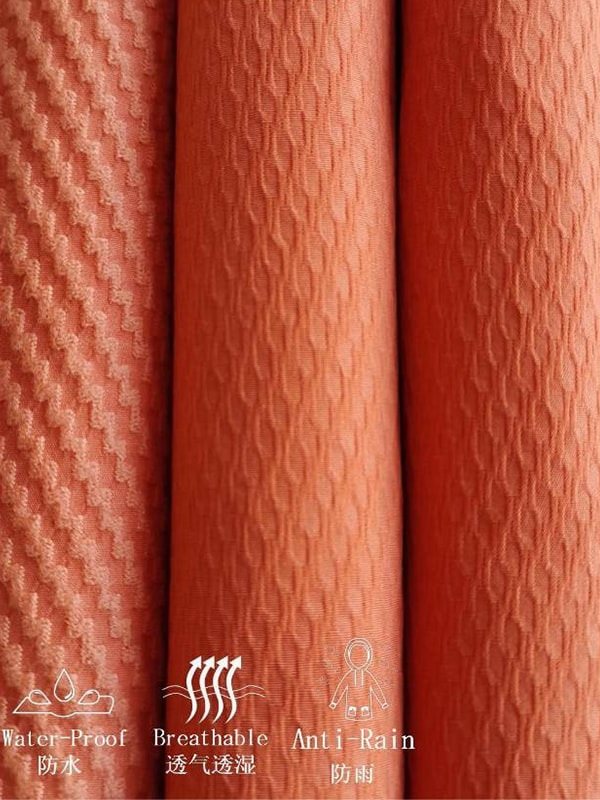
Stretch alone is not enough; the fabric must survive the environment. T800 fabrics are woven from dense, carefully interlaced polyester yarns, often with bamboo textures or large-square weaves that spread impact stress across a wider area. Instead of tearing at a single point, the weave disperses the force.
Double-weave T800 constructions go even further. A brushed, double-layer structure creates two interconnected planes of fabric, adding warmth, cushioning and snag resistance in the same weight envelope. That is why double-weave T800 frequently appears in hard-wearing alpine and field garments.
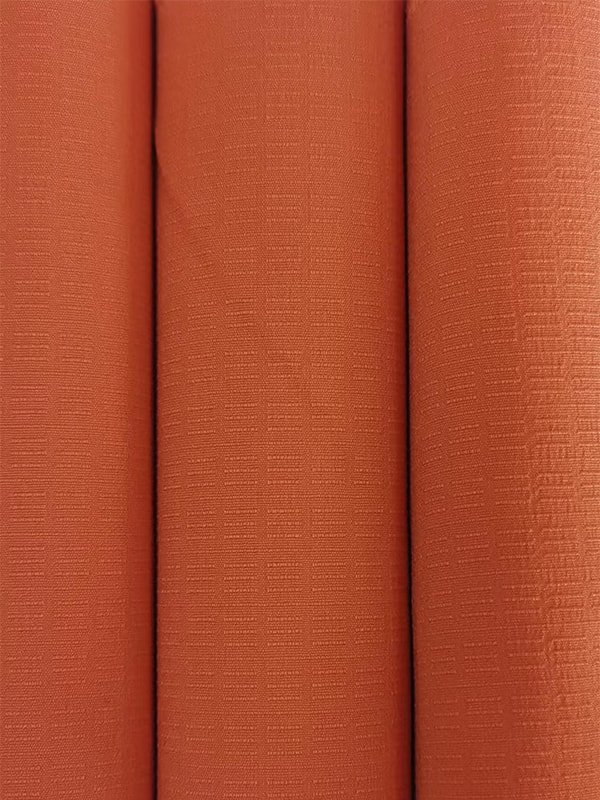
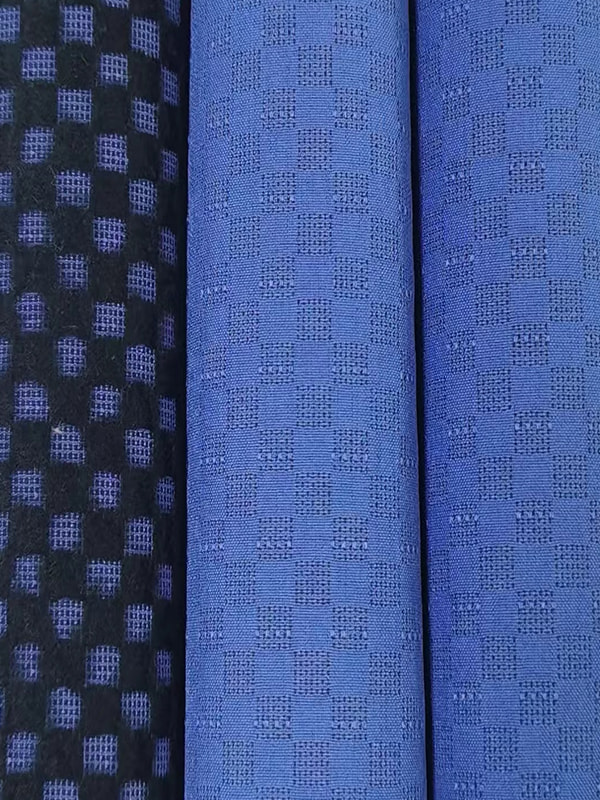
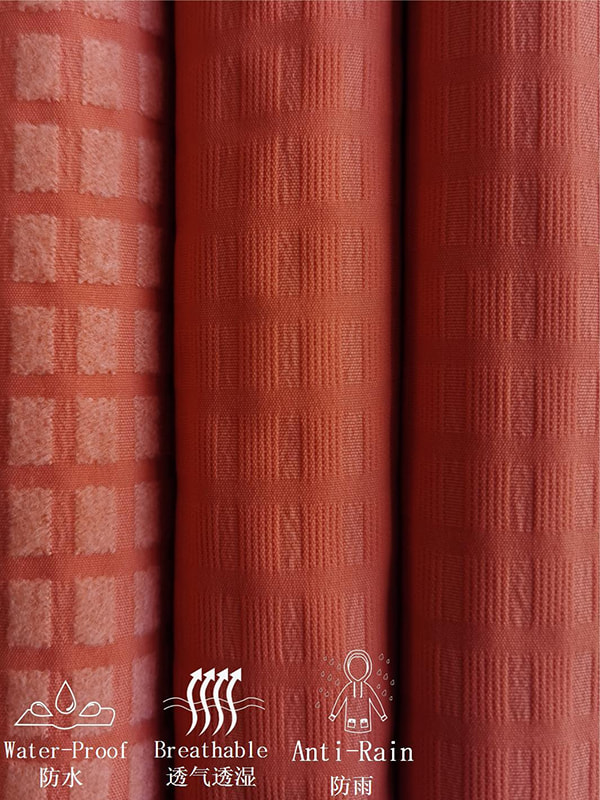 150D Large-Square Brushed Double-Weave T800 Mountaineering FabricThis double-weave T800 fabric combines a protective large-square face with a soft brushed interior, offering warmth, cushioning, and snag resistance for hard-wearing alpine and field garments.View Product →
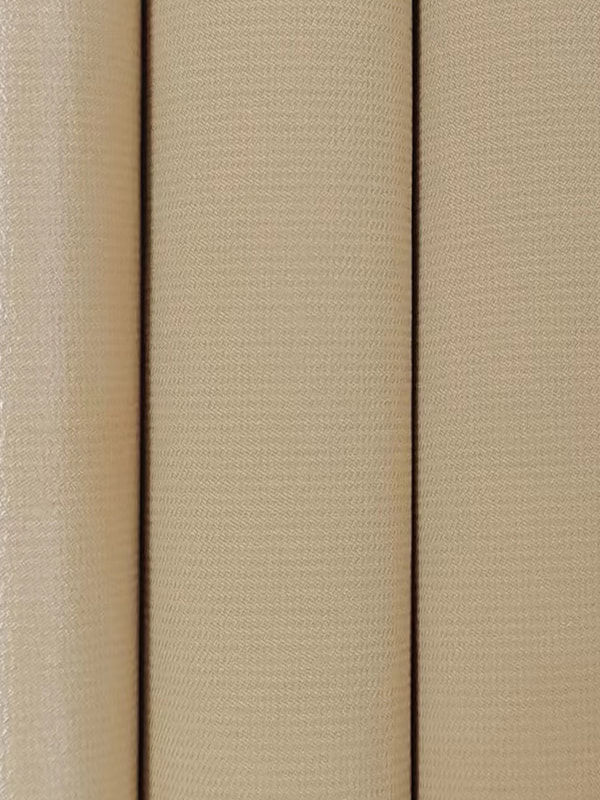
A 150D large-square brushed T800 mountaineering fabric, for example, pairs a protective double-weave face with a soft brushed interior. A 150D 2/2 twill bamboo T800 with low-transparency TPU adds a membrane for windproofing and water shedding. These structured options let product teams tune a garment for a specific route or mission instead of compromising on a one-size-fits-all shell.
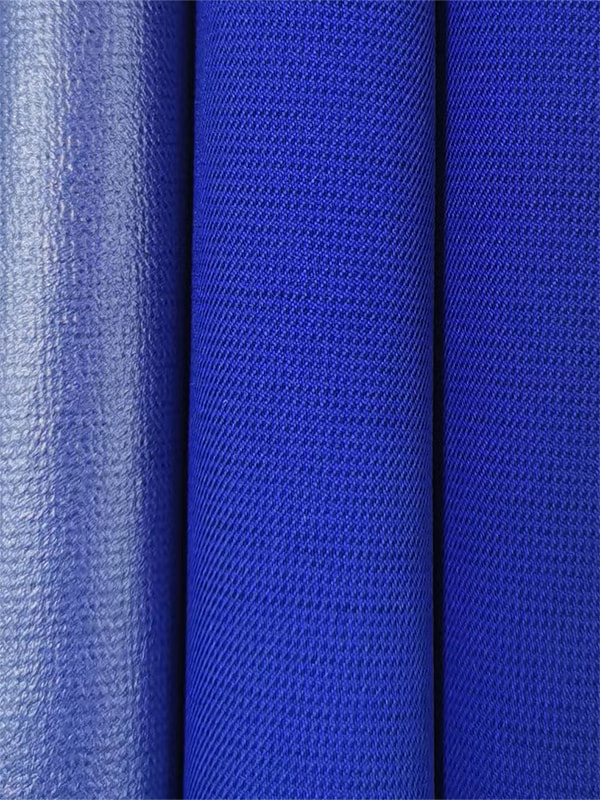 150D Dull 2/2 Twill Bamboo T800 Stretch Fabric with Low-Transparency TPUWith a 2/2 twill bamboo structure and a 0.012 mm low-transparency TPU film, this fabric blocks wind, sheds water, and reduces glint—valuable for alpine and low-observable tactical shells.View Product →
Weather Protection Without the Sweatbox Effect
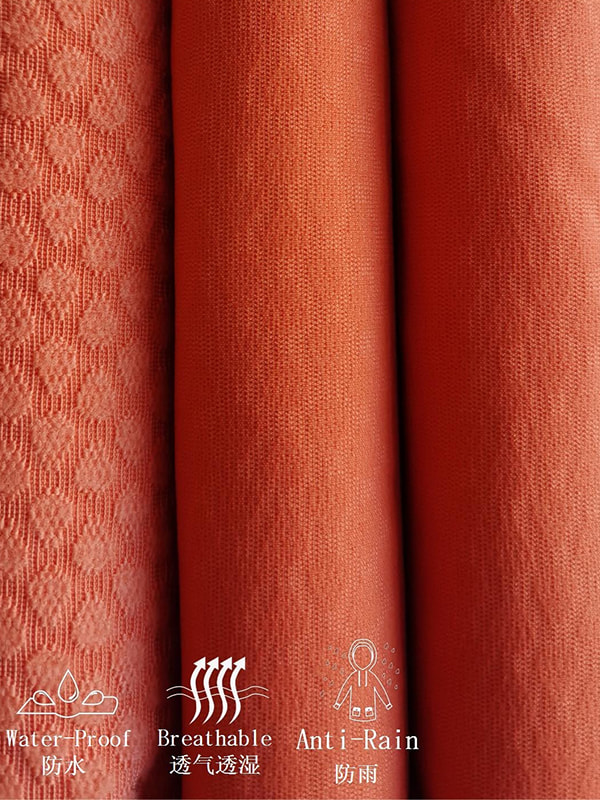
In alpine and tactical environments, wind and water are often more dangerous than the cold itself. T800 fabrics are frequently laminated with a 0.012 mm low-transparency TPU film. That film does three jobs at once: it blocks wind, sheds water, and reduces visible light reflection so the surface does not glint under sunlight or a flashlight beam. The last point is a genuine advantage for tactical users who need a low-observable shell.
At the same time, breathability cannot be sacrificed. A well-engineered T800 and TPU construction allows moisture vapor to escape during sustained exertion, so the wearer stays dry from the inside out. The result is a shell that feels calm in a storm and tolerable during hard output.
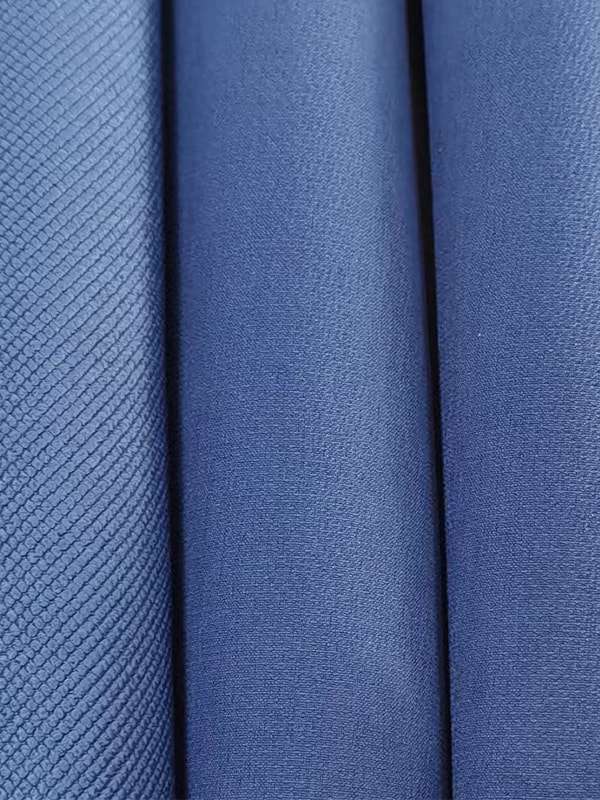
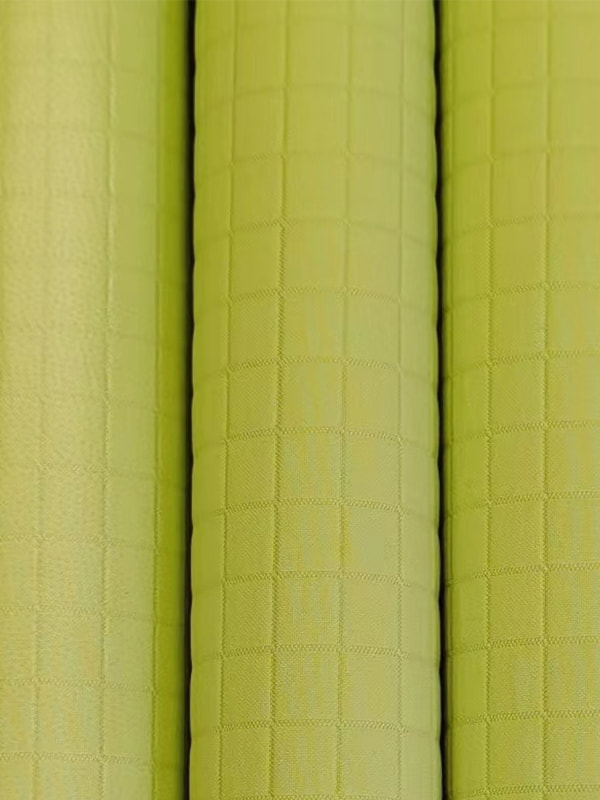 75D Dull Double-Layer T800 Stretch Fabric with Low-Transparency TPU 0.012This matte double-layer T800 fabric bonds with a low-transparency TPU film to resist scuffing, block wind and moisture, and stay non-reflective—suited for alpine or tactical use without sacrificing breathability.View Product →
The 75D dull T800 double-layer low-transparency TPU 0.012 is a strong example: its matte face hides grime, its double-layer build resists scuffing, and its bonded film blocks wind and moisture with a quiet, non-reflective surface that alpine and tactical users both appreciate.
Thermal Versatility: From Insulation to Cool-Touch Comfort
High-stress use is not only about extreme cold. Approaches, climbs and active operations can run hot, and a garment system has to cover the full range. T800 is manufactured in several thermal personalities:
- Double-sided brushed fleece T800 adds insulation and warmth without heavyweight, and works as a mid-layer or lining in cold-weather shells.
- Air-layer T800 constructions trap still air inside the weave, improving the warmth-to-weight ratio for insulation layers.
- Cool-silk-cotton T800 versions feel cool against the skin and help move heat away during high-exertion or summer missions.
Because the same elastic platform carries all three versions, a brand can build a complete layered system, base, mid, shell, where every layer stretches consistently and works with the others. That consistency shortens development time and improves comfort in the field.
Consistent Quality and Supply for Brands and Manufacturers
A high-performance fabric only creates value when it arrives consistently. Procurement teams need a supplier who controls the entire chain, from spinning and texturing to weaving and finishing. Integrated production allows tighter control over yarn quality, weave density and finishing chemistry, which means fewer surprises in production batches.
Our group operates two production bases, in Wujiang and Siyang, with an annual output of roughly 60 million meters of functional textiles. Quality control covers greige inspection, dyeing inspection and final fabric inspection at every stage of finishing. Certifications including O-tex100 and GRS give buyers documented evidence for environmental and safety claims.
60M+ metersAnnual weaving capacity
2 basesIntegrated production sites
3-stage QCGreige, dyeing, finished fabric
24hAfter-sales response
We also help brands de-risk new T800 programs by running from initial sampling through adjustment, garment verification and trend color matching, so a new style can be validated before production. For a deeper technical view, read our deep-dive guide to T800 performance and breathability.
Frequently Asked Questions
Q1: Is T800 fabric waterproof?
Not every T800 fabric is waterproof on its own. When laminated with a low-transparency TPU film, T800 provides strong wind resistance and water repellency, and the membrane prevents moisture from soaking through. For full waterproofness, the film specification, seam sealing and construction details must match the intended climate and activity level.
Q2: How does T800 differ from T400?
Both T400 and T800 are high-elasticity polyester stretch products, and both can provide four-way stretch. T400 is a widely used bicomponent elastic system that works well in light and mid-weight garments. T800 uses a different yarn geometry that delivers more pronounced elastic recovery in heavier and more demanding constructions, which is why it appears so often in mountaineering, tactical and outerwear programs.
Q3: Can T800 fabric be used in warm or summer conditions?
Yes. The T800 family includes cool-silk-cotton versions, open weaves and lightweight constructions designed for ventilation and a cool hand feel. A breathable T800 without a film layer works well in approach wear and warm-weather tactical clothing, while film-laminated versions are better for transitional and cold-weather use.
Q4: Is T800 fabric suitable for sustainable product lines?
T800 fabrics can be produced with recycled polyester and with environmentally responsive dyeing and finishing processes. GRS certification supports traceability of recycled content, while O-tex100 verifies that the finished product stays within strict limits for harmful substances. Both credentials help brands defend the environmental and safety claims they make to their customers.
T800 is not a single product; it is a performance platform. Whether you are designing a mountaineering shell, a tactical softshell, or a durable field jacket, the combination of four-way stretch, elastic recovery, abrasion resistance and film-laminated protection makes T800 a logical starting point.
If you are developing a high-stress garment program, talk to our fabric engineers about the right T800 construction for your route, your mission and your market. As an integrated manufacturer covering spinning, texturing, weaving and trading, we can support you from first sample to serial production.

Contact Us for More Details
Don't hesitate to contact when you need us!

Product Categories
Contact Information
-
NO.1 Huanhu Road(Building I)Pingwang, Wu Jiang, Suzhou, Jiangsu, China
-
+86-13962557213
-
+86-512-80739991-801
-
+86-512-80739990
