

 English
 中文简体
中文简体
The Ultimate Guide to Double Woven Fabric: Innovation, Applications, and Advantages
2025-12-19
Content
- 1 Unraveling the World of Double Woven Fabric
- 2 Defining Double Weave: More Than Just Layers
- 2.1 The Fundamental Mechanisms of Creation
- 2.2 What are the benefits of double woven fabric for upholstery?
- 2.3 How does double woven fabric compare to single layer alternatives?
- 2.4 Is double woven cotton fabric good for winter clothing?
- 2.5 What is the process of manufacturing double woven fabric?
- 2.6 How to care for and clean double woven textiles?
- 3 The Expansive Applications of Double Woven Fabrics
- 4 Innovation and Sustainability in Double Weave Production
Unraveling the World of Double Woven Fabric
In the intricate landscape of textile manufacturing, certain constructions stand out for their complexity, durability, and unique properties. Among these, double woven fabric represents a pinnacle of weaving technology, offering solutions where single-layer fabrics fall short. This comprehensive guide delves deep into the essence of double woven textiles, exploring their creation, distinctive characteristics, and the vast array of applications they serve across multiple industries. As a textile production enterprise that integrates spinning, texturing, weaving, and trade, Suzhou Redcolor International Trading Co., Ltd. brings a unique perspective to this advanced fabric. With an annual output of approximately 60 million meters of various textiles from its production bases in Wujiang and Siyang, the company's expertise underscores the industrial significance and meticulous craftsmanship required to produce high-quality double woven materials for markets in the United States, Europe, Southeast Asia, and beyond. This article will serve as an authoritative resource, integrating valuable long-tail keywords to answer specific queries and illuminate the path from loom to end-use.
Defining Double Weave: More Than Just Layers
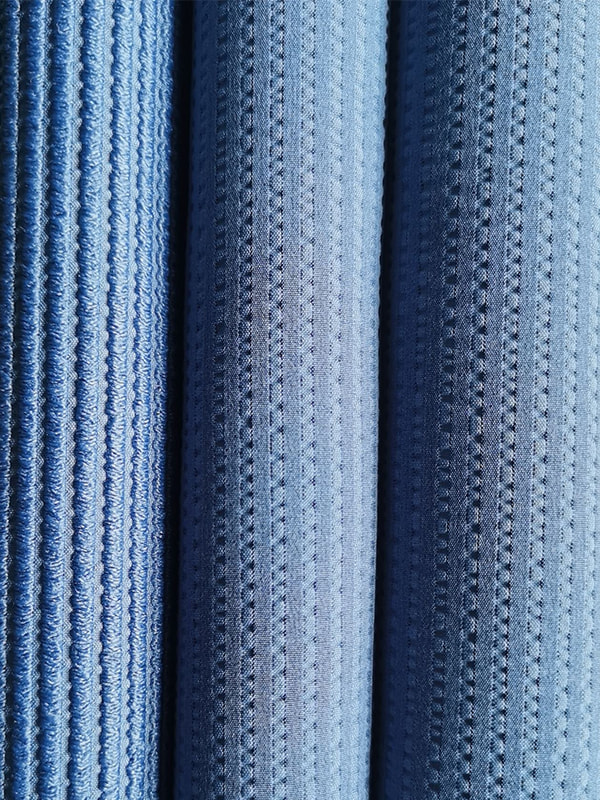
At its core, double weave is a structure where two distinct layers of fabric are woven simultaneously on the same loom, interconnected in specific, predetermined ways. Unlike a simple laminated material, these layers are born together, creating a unified textile with properties that are fundamentally different from a single cloth of equivalent weight. The process requires sophisticated loom setup and precise control, often involving multiple warp and weft systems. The connection between the two layers can vary: they might be joined at the selvedges only, creating a tubular fabric, or interlaced at regular intervals across the width, forming a cohesive, stable bilayer. This inherent versatility in construction is what unlocks the fabric's potential, allowing designers and engineers to tailor characteristics like weight, insulation, texture, and even aesthetic patterns by manipulating the interaction between the two layers. The commitment to such complex manufacturing is reflected in the operations of integrated producers, where control over the entire process—from spinning to weaving—ensures the consistency and quality required for these technical textiles.
The Fundamental Mechanisms of Creation
The creation of a double woven fabric is a symphony of coordinated movements. It typically involves two sets of warp yarns (the longitudinal threads) and two or more sets of weft yarns (the crosswise threads). These warp sets can be arranged on separate beams or on a single, sophisticated beam, and they are controlled by a loom's harnesses to create two independent sheds—the openings through which the weft is passed. The magic happens in the binding points, where a warp thread from the top layer interlaces with a weft from the bottom layer, or vice versa, at precise moments. This binding can create a myriad of effects. For instance, a tight, frequent binding will produce a stiff, padded fabric ideal for technical applications, while a loose, occasional binding can yield a drape-able cloth with a hidden insulating layer. The complexity means that producing consistent, high-yardage double weaves, such as the millions of meters produced annually by dedicated manufacturers, requires not only advanced machinery but also deep, accumulated technical knowledge to troubleshoot and perfect the weave.
What are the benefits of double woven fabric for upholstery?
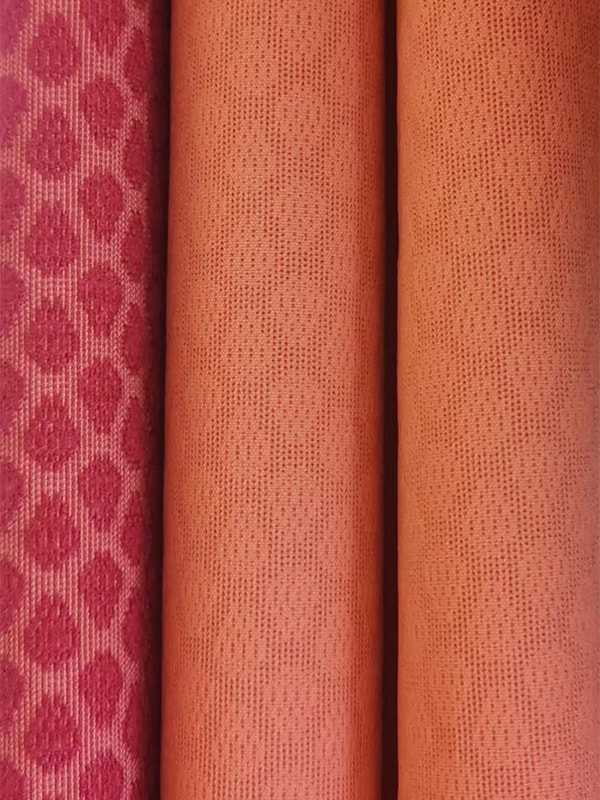
The application of double woven fabric for upholstery is a masterstroke in combining aesthetics with extreme durability. Upholstery fabrics endure constant abrasion, tension, and exposure to light and spills, demanding a material that is as tough as it is beautiful. Double woven fabrics excel here for several compelling reasons. Firstly, the two-layer construction inherently provides greater tensile strength and resistance to tearing. When a force is applied, it is distributed across two interconnected planes, making it far more difficult for a snag or pull to become a catastrophic rip. Secondly, the potential for hidden complexity means the face layer can be crafted from a luxurious, aesthetically focused yarn (like a fine wool or textured cotton) for visual appeal and hand-feel, while the back layer can utilize a stronger, more cost-effective, or specifically functional fiber (like high-tenacity polyester) for structural integrity. This is a distinct advantage over a single-layer fabric of similar face quality, which would lack this hidden reinforcement.
Furthermore, the air pocket trapped between the two layers acts as a natural cushioning agent, enhancing the comfort and plushness of the furniture without the need for additional padding that can break down over time. This built-in resilience translates to furniture that maintains its shape and comfort for years. For designers, the technique allows for creative patterning, such as creating a solid color on one side and a complex jacquard pattern on the other, or achieving color-block effects through the strategic use of different colored yarns in each layer. From a manufacturing and sourcing perspective, companies specializing in integrated production can reliably supply the substantial, consistent yardage needed for furniture lines, ensuring that every sofa or chair in a collection matches perfectly in weight, texture, and performance.
How does double woven fabric compare to single layer alternatives?
Choosing between a double woven fabric and a single layer alternative is a critical decision that impacts performance, cost, and application suitability. The comparison is not about which is universally better, but about which is optimally suited for a given purpose. To provide a clear, structured overview, let's examine the key differences across several attributes.
The fundamental distinction lies in structure: a single layer fabric is one cohesive plane of interlaced threads, while a double weave consists of two such planes connected during weaving. This structural difference cascades into all other properties. For instance, in terms of durability and strength, a double weave is generally superior because stress is distributed across two layers. A heavy-duty single layer might match it in weight, but often at the expense of drape and flexibility. Regarding thermal insulation, the air gap in a double weave provides inherent insulating properties, a feature single-layer fabrics entirely lack unless a separate lining or batting is added later. When it comes to design complexity, double weaves offer unique possibilities like reversible patterns or hidden pockets, whereas single layers are typically limited to surface design techniques like printing or embroidery.
The following table encapsulates these and other critical comparisons:
| Attribute | Double Woven Fabric | Single Layer Fabric |
|---|---|---|
| Structure & Weight | Two interconnected layers; inherently heavier for a given yarn size. | One cohesive layer; generally lighter, but can be made heavy with thick yarns. |
| Durability & Tear Resistance | Excellent. Force is distributed across two planes, making it highly resistant to tearing and abrasion. | Good to Very Good, but dependent entirely on the single layer's density and yarn strength. A puncture compromises the entire structure. |
| Thermal Insulation | Naturally insulating due to the air pocket between layers. Ideal for outerwear, blankets, and insulated upholstery. | Provides minimal insulation unless combined with other materials (e.g., quilting). |
| Design Versatility | High. Allows for reversible designs, hidden patterns, integrated pockets, and complex texture contrasts between layers. | Limited to surface effects. Pattern is usually on one side only. |
| Drape and Flexibility | Can range from stiff (if layers tightly bound) to surprisingly fluid (if layers loosely connected). Often has a substantial "hand." | Typically more flexible and drapable, especially in lighter weights. Hand is directly related to yarn and weave. |
| Production Complexity & Cost | High. Requires specialized looms, more yarn, and skilled operation, leading to a higher cost per meter. | Lower to Moderate. Standard weaving processes apply, making it generally more cost-effective. |
| Common Applications | High-end upholstery, technical outerwear, blankets, bags, industrial fabrics, reversible coats. | Apparel, light-to-medium duty upholstery, linings, shirts, dresses, sheets. |
This comparison highlights that double woven fabric is better than single layer when the primary requirements are enhanced durability, inherent insulation, unique reversible aesthetics, or complex structural functionality. The investment in its higher cost and complexity is justified by these performance gains. Conversely, for applications where light weight, maximum drape, or simple cost-efficiency are paramount, a well-chosen single layer fabric remains the superior choice.
Is double woven cotton fabric good for winter clothing?
Absolutely. Double woven cotton fabric for winter clothing is an excellent, often underappreciated, choice that combines natural fiber benefits with engineered warmth. Cotton is prized for its softness, breathability, and hypoallergenic properties, but traditional single-layer cotton garments are poor insulators, as the fiber itself does not trap heat well. Double weaving transforms this. By creating two layers of cotton with a stabilized air space in between, the fabric gains a thermal buffer. This still air is what provides insulation, slowing the transfer of body heat to the cold outside environment. The result is a garment that is warm yet retains cotton's hallmark breathability, reducing the clamminess often associated with synthetic insulated jackets.
Furthermore, double woven cotton fabrics for clothing often employ finer yarns in the inner layer for softness against the skin and more robust or textured yarns on the outer layer for durability and aesthetic appeal. This construction can also be used to create beautiful reversible garments—a solid color on one side and a plaid or herringbone on the other—maximizing versatility. For producers focused on full-process control, from spinning the cotton yarns to the final weaving, ensuring the quality and consistency of both layers is paramount to creating a winter garment that performs reliably. The fabric's natural weight and substance also contribute to a premium feel and excellent drape, making it ideal for coats, jackets, structured skirts, and even heavy-weight trousers designed for cooler weather.
What is the process of manufacturing double woven fabric?
The process of manufacturing double woven fabric is a meticulous sequence that demands precision at every stage, from fiber selection to final inspection. It is a process best mastered by vertically integrated manufacturers who oversee the entire pipeline. The journey begins with the selection and preparation of yarns. Often, different yarns are chosen for each layer based on their intended function. For example, a project might combine mercerized cotton for a lustrous face with a microfiber polyester for a strong, stable backing. These yarns are then wound onto cones and prepared for the warp beam. In double weaving, creating the warp is particularly complex, as it may involve mounting two full sets of ends (warp threads) on separate beams or carefully spacing a single set that will be split into two layers by the loom's harnesses.
The heart of the process is on the loom. Modern industrial looms, often electronic jacquard or dobby looms, are programmed with the precise weave pattern for both the top and bottom layers, as well as the binding points that connect them. The loom's harnesses lift and lower the thousands of warp threads in a precise sequence to create the sheds for each layer. The weft insertion mechanism (rapier, air jet, or projectile) then shoots or carries the filling yarns through these sheds. In true double weaving, two separate weft insertions typically occur—one for the top layer and one for the bottom layer—per machine cycle. The reed then beats both wefts into place simultaneously, forming the cloth. Key steps in this specialized manufacturing process include:
- Yarn Sourcing & Spinning: Selecting and often spinning fibers with specific characteristics for each layer's purpose (e.g., warmth, wicking, strength, softness).
- Warping & Sizing: Creating two parallel warp chains or a single chain destined for separation, applying a protective size to reduce abrasion during weaving.
- Loom Programming & Setup: This is the most technical step. The weave design is translated into a digital file that controls every lift of every harness. Technicians meticulously thread the heddles and reed according to the design.
- Weaving: The automated but closely monitored process of interlacing the warps and wefts to build the two-layer cloth. Skilled operators watch for yarn breaks or tension issues that could ruin the complex structure.
- Finishing: The greige (unfinished) fabric undergoes processes like washing, shrinking, bleaching, dyeing, and potentially applying special finishes (water-repellent, flame-retardant, etc.). Finishing is crucial for setting the final hand, stability, and performance of the fabric.
- Quality Control: Rigorous inspection for consistency in weight, density, binding points, and color across the entire length of the production run.
This intricate process, managed on an industrial scale by companies with deep expertise, is what allows for the reliable production of high-performance double woven textiles that meet exacting international standards.
How to care for and clean double woven textiles?
Proper maintenance is essential to preserve the structure, appearance, and functionality of double woven fabrics. The care regimen for these textiles is not necessarily more difficult than for single-layer fabrics, but it must be informed by an understanding of their layered nature. The golden rule is always to check the care label first, as the recommended method will depend heavily on the fiber content of both layers. However, some general principles apply to how to care for and clean double woven textiles. Due to their density and potential for differential shrinkage between layers, gentle cleaning methods are generally preferred. Agitation in a washing machine, especially a top-loader with a central agitator, can stress the binding points and cause puckering or distortion.
For many double wovens, particularly those used in upholstery or containing wool, professional dry cleaning is the safest option. The chemical solvent process effectively cleans without causing the mechanical stress or water-induced shrinkage of wet washing. For washable varieties (e.g., all-cotton or polyester/cotton blends), a cold or lukewarm gentle cycle in a front-loading machine is advisable. Using a mild detergent and avoiding bleach is crucial. A key step after washing is drying: never wring out a double woven fabric, as this can permanently misalign the layers. Instead, lay the item flat on a drying rack in its natural shape, away from direct heat or sunlight, which can cause fading or fiber damage. For items like jackets or coats, using a low-heat tumble dry with clean dryer balls to fluff the fabric can be acceptable if the care label permits. Ironing should be done on a medium setting appropriate for the face fiber, and it's often best to iron the fabric while it is still slightly damp and to use a press cloth to avoid shine on the surface.
- Always Read the Label: The manufacturer's instructions are the primary guide, as they know the specific fiber blend and construction.
- Prefer Professional Care for Complex Items: Upholstery, structured garments, and blends of natural/synthetic fibers often benefit from dry cleaning.
- Use Gentle, Cold Wash Cycles: If machine washing, select the gentlest cycle with cold water to minimize agitation and thermal shock.
- Air Dry Flat: This is the single most important step for home care. It prevents distortion and maintains the integrity of the air gap between layers.
- Store Properly: Store garments on padded hangers to maintain shape. For household textiles, avoid tight compression that could permanently crush the loft of the fabric.
Adhering to these care guidelines will significantly extend the life and beauty of double woven items, ensuring that the investment in this premium textile pays dividends for years to come.
The Expansive Applications of Double Woven Fabrics
The unique properties of double woven fabrics open doors to a remarkably diverse range of applications, far beyond conventional textiles. This versatility is a key driver for integrated manufacturers who supply multiple markets. In the apparel sector, they are the foundation of high-end reversible coats, insulated winter jackets, structured blazers, and even premium denim with unique thermal properties. The fashion industry values them for their aesthetic depth and the luxury of reversible garments. In the realm of home furnishings, they are the preferred choice for durable, comfortable, and visually rich upholstery on sofas, armchairs, and headboards, as well as for heavyweight drapes, thermal blankets, and decorative wall coverings. The technical and industrial applications are perhaps the most demanding: double wovens are used in geotextiles for soil stabilization, in filtration systems, as protective layers in automotive interiors, and in specialized luggage and sporting goods where abrasion resistance and shape retention are critical. This breadth of use demonstrates the fabric's role as a problem-solving material, engineered to meet specific challenges where a single layer simply cannot suffice.
Innovation and Sustainability in Double Weave Production
The future of double woven fabric is being shaped by twin imperatives: technological innovation and environmental responsibility. On the innovation front, digital jacquard looms and advanced CAD software allow for unprecedented design complexity and rapid prototyping, enabling the creation of fabrics with intricate 3D textures, integrated channels for wiring or piping, and smart textile functionalities. The integration of conductive yarns into one layer, for example, can create heated fabrics for apparel or automotive seating. Simultaneously, sustainability is becoming central to production ethos. This involves several key strategies:
- Material Sourcing: Increasing use of recycled fibers (e.g., recycled polyester or cotton) for one or both layers, reducing dependency on virgin materials.
- Process Efficiency: Optimizing loom settings and warp preparation to minimize yarn waste during production. Modern looms are also more energy-efficient.
- End-of-Life Consideration: Designing for disassembly or recyclability, though the blended nature of many double weaves presents a challenge that is being actively researched.
- Durability as Sustainability: Perhaps the most significant contribution is the fabric's inherent durability. A longer-lasting upholstery fabric, coat, or bag directly reduces consumption and waste, aligning with a "buy less, buy better" philosophy.
Producers who control the full vertical process are uniquely positioned to implement these sustainable practices at every stage, from selecting greener raw materials to ensuring efficient, low-waste manufacturing, ultimately delivering a high-performance product that aligns with contemporary environmental values without compromising on quality or functionality.
Contact Us for More Details
Don't hesitate to contact when you need us!
Product Categories
Contact Information
-
NO.1 Huanhu Road(Building I)Pingwang, Wu Jiang, Suzhou, Jiangsu, China
-
+86-13962557213
-
+86-512-80739991-801
-
+86-512-80739990
