

 English
 中文简体
中文简体
What Is Mechanical Stretch Fabric? How Yarn Twist Creates Elasticity Without Elastane
2026-09-24
Mechanical stretch fabric is quietly changing the way apparel manufacturers think about elasticity. Instead of adding elastane to every stretch garment, fabric developers can create stretch and recovery through yarn geometry, twist, and heat setting. This approach gives sportswear, outerwear, and casual clothing a cleaner hand feel, easier dyeing, and a more sustainable profile.
Content
- 1 What Is Mechanical Stretch Fabric?
- 2 How Does Yarn Twist Create Elasticity Without Elastane?
- 3 Mechanical Stretch Fabric vs. Elastane-Based Stretch: A Practical Comparison
- 4 From Yarn to Finished Fabric: Key Factors That Matter
- 5 Where Mechanical Stretch Fabric Fits Best in Functional Apparel
- 6 Why the Right Mechanical Stretch Fabric Manufacturer Matters
- 7 Frequently Asked Questions
What Is Mechanical Stretch Fabric?
In simple terms, mechanical stretch fabric is a woven textile whose elasticity comes from textured yarns rather than from elastic fibers. The most common route is false-twist texturing, which reshapes synthetic filament yarn into a crimped, coiled structure. When that yarn is woven into a fabric, the tiny coils open under tension and spring back when tension is released.
Unlike spandex or elastane blends, mechanical stretch does not depend on a rubber-like polymer. It relies on the physical configuration of filaments. For this reason, mechanical stretch is often described as a no-spandex stretch system. The same no-spandex philosophy appears across several product families, including mechanical stretch, T400, and T800 fabrics, all of which use engineered yarns rather than elastane.
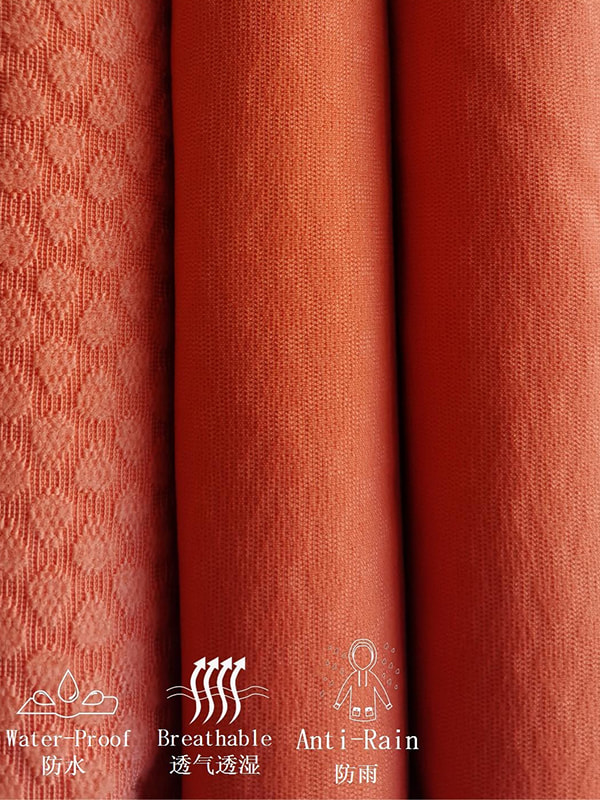
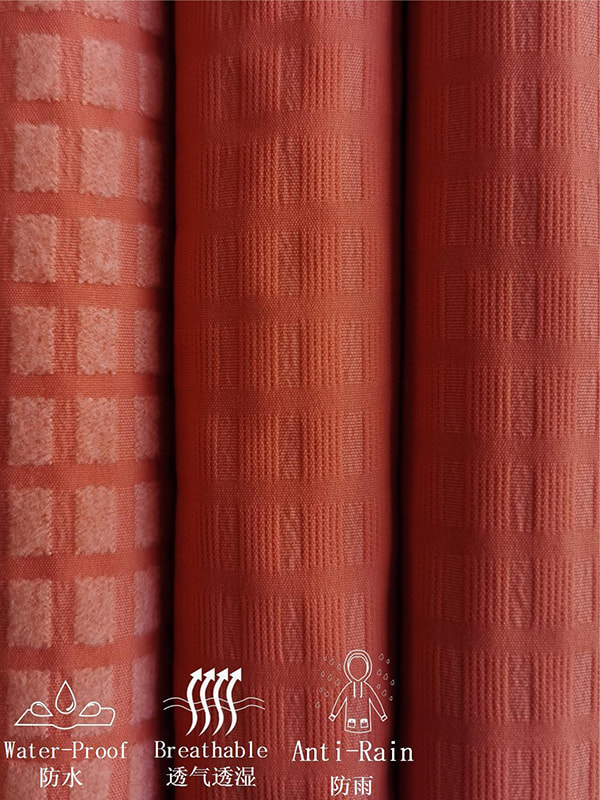
Designers use these fabrics in jackets, trousers, and sportswear where a stable shell fabric must still follow body movement. A classic example is a twill mechanical stretch fabric that keeps a woven look while offering comfortable freedom of movement.
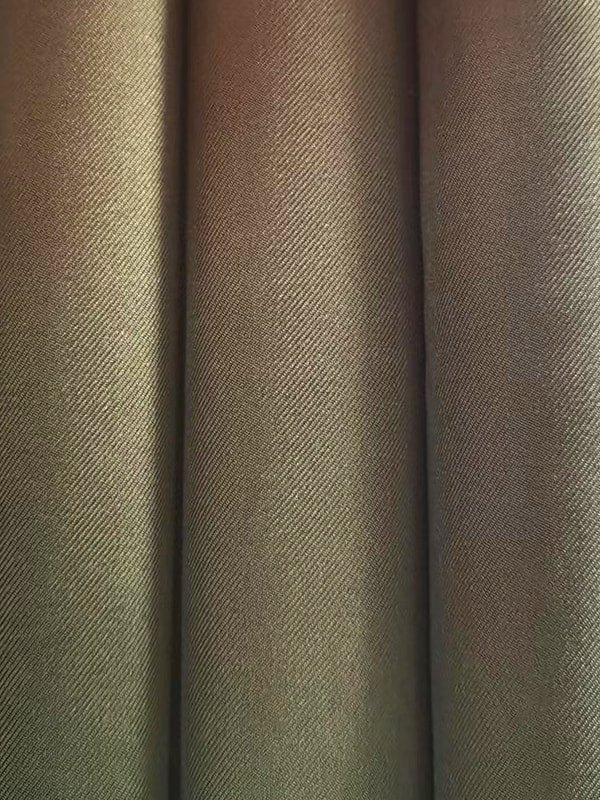 75D 2/2 Twill Mechanical Stretch Fabric for OuterwearThis woven twill fabric combines a textured diagonal surface with mechanical stretch, making it a comfortable yet stable choice for spring and autumn jackets. Its waterproof finish adds practical value.View Product →
How Does Yarn Twist Create Elasticity Without Elastane?
The core mechanism is known as false twist texturing. In this process, a flat filament yarn passes through a heating zone while being twisted. The heat relaxes the polymer and sets the helical shape of the twisted yarn. After the yarn is untwisted, the filaments retain a spring-like coil. This coil is what gives mechanical stretch.
Twist density matters. Higher twist generally creates more crimp and more potential stretch, but it also affects fabric bulk, coverage, and handle. Texturing temperature must be high enough to set the crimp without melting or weakening the filament. The result is a yarn that can elongate under load and recover close to its original length.
Why is it called false twist? Because the yarn is first twisted, heat-set, and then untwisted, leaving almost no net twist in the final yarn. The effect that remains is a zig-zag or spiral crimp: a microscopic spring built into every filament.
Think of a telephone cord. When you pull it, the coil opens and the cord extends. When you release it, the coil returns. A false-twist yarn works in the same way at a much smaller scale. The crimped yarn has more internal length than a straight yarn, and that extra length acts as a reservoir that allows the fabric to extend and recover.
For a closer look at why this works, our technical article on how mechanical stretch fabrics achieve elasticity through processing rather than elastic fiber explains the processing logic in more detail.
Mechanical Stretch Fabric vs. Elastane-Based Stretch: A Practical Comparison
Why choose one over the other? The answer depends on the garment application, comfort requirements, durability targets, and end-of-life recycling goals. The table below shows the main differences.
| Property | Mechanical Stretch Fabric | Elastane-Based Stretch Fabric |
|---|---|---|
| Elasticity source | Textured yarn geometry | Elastane filament |
| Stretch recovery | Progressive and stable | High immediate recovery |
| Hand feel | Woven, dry, cotton-like | Can feel rubbery at high content |
| Breathability | Usually easier to maintain | May be reduced with high elastane |
| Moisture management | Can be engineered with polyester or nylon | Requires careful yarn blending |
| Dyeing behavior | Uniform color on polyester and nylon | Elastane can affect dye uptake or cause color differences |
| Recyclability | More compatible with mono-material fabric | Harder to separate elastane from other fibers |
This does not mean mechanical stretch is always better. Elastane can deliver very high elongation and recovery, especially in tight activewear. But mechanical stretch offers a balanced set of benefits when a lightweight, breathable, and recyclable woven fabric is more important than extreme stretch.
From Yarn to Finished Fabric: Key Factors That Matter
Several variables decide how a mechanical stretch fabric actually performs on the body:
- Twist level and heat-set temperature determine how much crimp the yarn retains and how quickly it recovers.
- Yarn count and filament fineness affect softness, coverage, and final fabric weight.
- Weave construction, such as twill, plain, or ripstop, controls how visible the stretch is and how the fabric drapes.
- Finishing processes, including dyeing, brushing, and calendering, can modify stretch behavior and surface feel.
- Lamination with breathable membranes can add windproofing and low-transparency properties while preserving stretch.
These parameters allow textile mills to fine-tune elasticity for different garments. For example, a low-transparency TPU film can be combined with a lightweight mechanical stretch base fabric to make urban outerwear that does not feel stiff.
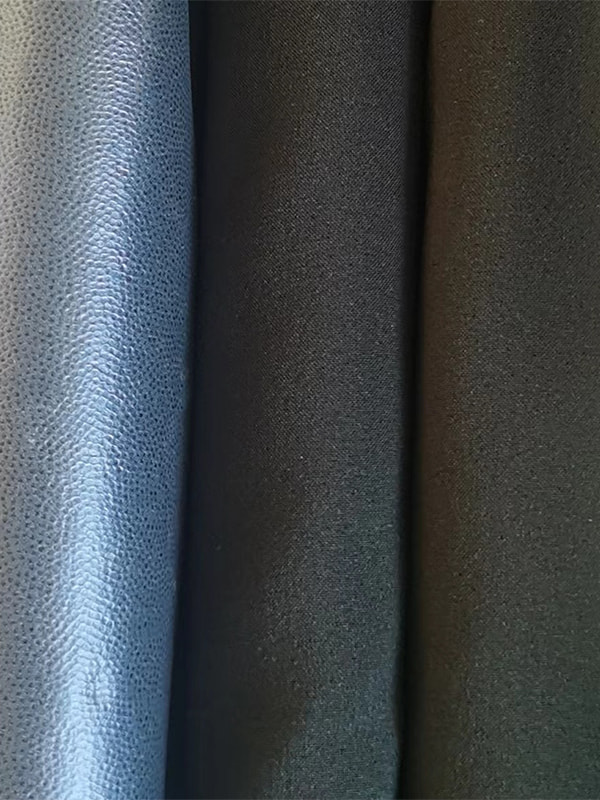 75D Plain Weft Ultra-High Elastic Stretch Fabric with Transparent TPU FilmFeaturing ultra-high elasticity and a low-transparency TPU film, this lightweight fabric offers flexible movement without stiffness, suitable for urban outerwear that requires both comfort and a clean appearance.View Product →
Where Mechanical Stretch Fabric Fits Best in Functional Apparel
Mechanical stretch fabric is not limited to athletic wear. It is also used in uniforms, workwear, and modern outdoor jackets where a natural woven hand is preferred. Common application areas include:
- Outdoor jackets and mountaineering layers, where freedom of movement and a stable shell are both essential.
- Sportswear and training bottoms, where moisture management matters as much as stretch.
- Casual trousers and shirts, where mechanical stretch adds comfort without changing the woven appearance.
- Winter and insulated garments, where double-weave or brushed-back versions add warmth without restricting motion.
Depending on fabric structure, mechanical stretch can provide one-way or even four-way stretch. Four-way stretch is especially useful for cycling, yoga, and mountaineering apparel because it moves with the body in every direction.
The best mechanical stretch fabric starts with controlled yarn texturing, because the stretch is locked into the yarn before the fabric is woven.
Why the Right Mechanical Stretch Fabric Manufacturer Matters
Choosing a supplier with integrated yarn and fabric production makes it easier to control twist, tension, and consistency. At Suzhou Redcolor International Trading Co., Ltd., production covers yarn texturing, warping, weaving, and finishing, allowing close tracking from raw material to finished roll. This is important because mechanical stretch depends on process parameters that are hard to correct later.
Because elastic behavior is not visible until the fabric is stretched, every step from false-twist texturing to final inspection affects performance. Our manufacturing team builds mechanical stretch fabrics around these production details, with in-house texturing and weaving equipment across two manufacturing bases. We also follow standardized quality control procedures from grey fabric inspection to finished-goods inspection.
Frequently Asked Questions
Q1: Does mechanical stretch fabric contain elastane?
No. Mechanical stretch fabric uses textured synthetic yarns, usually polyester or nylon, to create stretch and recovery without elastane. This is why it is sometimes called no-spandex stretch fabric.
Q2: How is yarn twist different from spandex in creating stretch?
Spandex adds an elastic polymer fiber that stretches like a rubber band. Yarn twist changes the shape of the yarn so it behaves like a spring. The stretch from yarn twist is more subtle and easier to combine with crisp woven textures.
Q3: Is mechanical stretch fabric breathable?
Because the stretch is created in the yarn rather than by an elastic fiber, mechanical stretch fabrics can be designed with good breathability. When waterproof or low-transparency properties are needed, breathable TPU or PTFE laminates can be added without removing the stretch.
Q4: Can mechanical stretch fabric be recycled?
Mechanical stretch fabrics made from mono-material polyester are usually easier to recycle than elastane blends. It is still important to check dyes, laminates, and finishes, because they may affect the recycling stream.
Mechanical stretch fabric is a practical answer to the growing need for comfortable, functional textiles with less reliance on elastane. By starting with false-twist yarns and building the stretch into the structure, manufacturers can create fabrics that move with the wearer, keep their shape, and support cleaner production.
Contact Us for More Details
Don't hesitate to contact when you need us!
Product Categories
Contact Information
-
NO.1 Huanhu Road(Building I)Pingwang, Wu Jiang, Suzhou, Jiangsu, China
-
+86-13962557213
-
+86-512-80739991-801
-
+86-512-80739990
