

 English
 中文简体
中文简体
What is Mechanical Stretch Fabric?
2026-02-17
In the pursuit of apparel that moves with the body, stretch has become non-negotiable. However, not all stretch is created equal. While spandex (or elastane) dominates casual wear, a more robust and enduring alternative powers performance gear and durable clothing: Mechanical Stretch Fabric. This innovative category derives its flexibility not from chemical elastomers but from sophisticated physical engineering at the yarn and structural level. Understanding what is mechanical stretch in textiles is crucial for designers, brands, and manufacturers who prioritize longevity, stability, and performance under stress. Unlike its chemical counterpart, mechanical stretch offers superior resistance to heat, chlorine, and oils while maintaining exceptional recovery over the garment's lifespan. This makes it the undisputed choice for demanding applications where failure is not an option. From the factory floor to the mountain trail, fabrics engineered with mechanical stretch provide freedom of movement without compromising on durability or finish. As integrated manufacturers with deep expertise in yarn texturing, weaving, and finishing, we specialize in developing these high-performance solutions, producing millions of meters annually for global markets. This guide will delve into the mechanics, comparisons, and ideal applications of this pivotal textile technology.
Content
- 1 Demystifying the Core Concept: What is Mechanical Stretch?
- 2 Mechanical Stretch vs. Spandex: A Critical Comparison
- 3 Engineering Flexibility: How Mechanical Stretch is Made
- 4 The Workwear Champion: Durability Meets Mobility
- 5 Built for the Elements: Stretch in Outdoor Gear
- 6 FAQ
- 6.1 Does mechanical stretch fabric lose its elasticity over time?
- 6.2 Can mechanical stretch fabrics be washed in hot water or ironed?
- 6.3 What is Polyester T400, and is it a mechanical stretch fabric?
- 6.4 How do I choose between a woven and a knit mechanical stretch fabric?
- 6.5 Is mechanical stretch fabric more expensive than spandex-blend fabric?
Demystifying the Core Concept: What is Mechanical Stretch?
At its heart, mechanical stretch is a principle of physics applied to textiles. It refers to a fabric's ability to extend and recover primarily due to the physical structure of its yarns and its construction (weave or knit), rather than relying on elastic fibers like spandex. The magic lies in engineered crimp, coil, or helix within the individual yarn filaments. When tension is applied, these coiled structures straighten, allowing the fabric to stretch. Upon release, the inherent memory in the textured yarn causes it to spring back to its original coiled state, recovering its dimensions. This fundamental difference in origin leads to a distinct set of properties that address the limitations of chemical stretch fabrics, particularly in environments involving high temperatures, repeated industrial washing, or exposure to harsh chemicals. It is a testament to textile engineering, transforming standard fibers like polyester and nylon into dynamic, responsive materials.
The Fundamental Principle: Structure Over Chemistry
The core mechanism involves imparting a permanent, three-dimensional deformation to synthetic filaments. Through processes like false-twist texturing or air-jet texturing, straight filaments are twisted, heated, and cooled to set a permanent spiral or looped shape. This physical modification is locked into the polymer, creating a spring-like action. The fabric's construction is then designed to leverage this yarn behavior, allowing the stretch to manifest across the cloth.
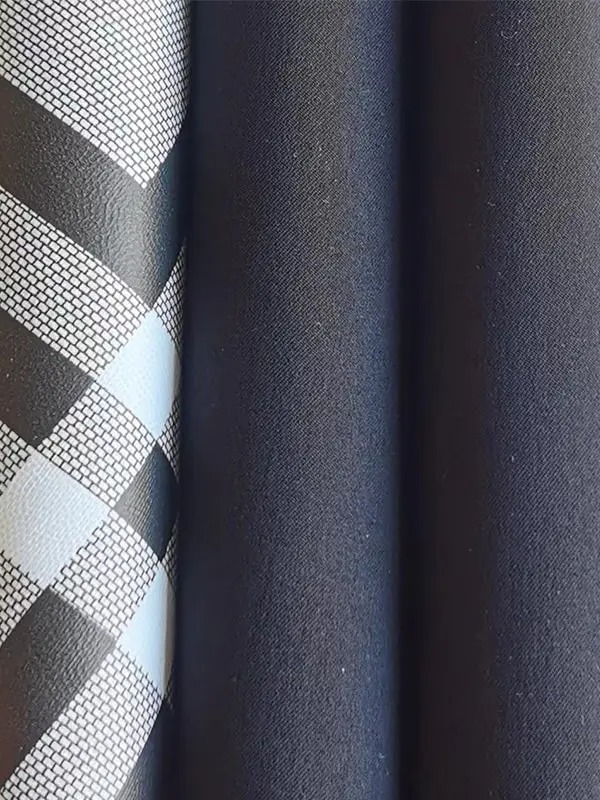
Key Characteristics of Mechanical Stretch Fabrics
- Durability and Recovery: They exhibit excellent long-term elasticity recovery because the stretch mechanism is physical and not prone to the polymer fatigue that affects elastanes. The fabric's strength comes from the core fiber (e.g., polyester), making it highly resistant to abrasion.
- Heat and Chemical Resistance: Since the stretch is not dependent on a heat-sensitive elastomer, these fabrics can withstand higher ironing temperatures, hot washing, and exposure to chemicals like chlorine or oils without degrading the elastic property.
- Superior Dimensional Stability: They offer minimal growth or bagging over time. The stretch is more controlled and provides a supportive feel, excellent for tailored garments or gear that must retain its shape.
Mechanical Stretch vs. Spandex: A Critical Comparison
The choice between mechanical stretch vs spandex fabric comparison is a fundamental decision in apparel development. Spandex, a synthetic elastomer, provides high, omnidirectional stretch (often 100-200% elongation) by stretching the molecular chains within the fiber itself. It's lightweight and offers a compressive feel. However, its weaknesses include vulnerability to heat, UV degradation, chlorine, and oils, which can cause it to break down and lose elasticity. Mechanical stretch, in contrast, typically offers a more moderate degree of stretch (often 15-30% in wovens), but it does so with far greater resilience to environmental stressors. The stretch is often more directional, aligned with the grain of the fabric, which can be advantageous for structured garments. This comparison isn't about which is universally better, but about matching the right technology to the product's performance requirements and lifecycle expectations.
The Spandex (Elastane) Baseline: How Chemical Stretch Works
Spandex fibers are block copolymers containing long, flexible segments that uncoil under tension. This provides immense, rubber-like elasticity from a very small percentage of fiber content (often 2-10%). Its integration is simple, but its long-term integrity is the trade-off.
Side-by-Side: Performance and Application Breakdown
| Attribute | Mechanical Stretch Fabric | Spandex-Blended Fabric |
| Stretch Mechanism | Physical yarn/texture & fabric structure | Molecular elasticity of elastane fibers |
| Typical Stretch Level | Moderate (e.g., 20-30%) | High (e.g., 50-150%+) |
| Heat Resistance | Excellent | Poor (degrades at high temps) |
| Chlorine/Oil Resistance | Excellent | Poor to Fair |
| Durability & Recovery Over Time | Excellent, low growth | Good initially, can degrade |
| Common Applications | Workwear, outdoor gear, uniform fabrics, tailored pants | Athleticwear, swimwear, leggings, form-fitting fashion |
Engineering Flexibility: How Mechanical Stretch is Made
The creation of mechanical stretch fabric is a multi-stage process that begins long before the weaving loom. Understanding how is mechanical stretch fabric made reveals the precision engineering behind its performance. It starts with the transformation of standard, fully-oriented synthetic filaments into highly elastic yarns through texturing processes. This pre-treated yarn is then woven or knitted using specific techniques that preserve and enhance its stretch potential. Finally, a critical heat-setting stage locks the stretch memory into the fabric, ensuring permanent recovery. Each step, from the texturing machine to the finishing stenter, must be meticulously controlled to produce a consistent, reliable stretch characteristic. This integrated approach, from yarn to finished fabric, allows for the optimization of properties like stretch direction, percentage, hand feel, and durability.
The Role of Yarn Engineering: Crimp, Coil, and Texture
- False Twist Textured Yarn (FTY): The most common method. Filaments are highly twisted, heat-set, and then untwisted, leaving them with a permanent helical crimp. This creates a compact, stretchy yarn with excellent recovery, often used in finer fabrics.
- Air-Jet Textured Yarn (ATY): Filaments are blown with high-pressure air, creating loops and tangles that interlock. This produces a bulkier, more voluminous yarn with good stretch and a soft, cotton-like hand, ideal for apparel seeking natural fiber aesthetics.
Weave and Knit Constructions that Enhance Stretch
The fabric structure plays a decisive role. In wovens, stretch is often engineered into the weft (crosswise) direction by using the textured yarn there, while stable yarns in the warp provide strength. Special weaves like stretch twills or satins are employed. In knits, the inherent looped structure provides stretch, and using textured yarns amplifies recovery and reduces sag.
The Workwear Champion: Durability Meets Mobility
Finding the best mechanical stretch fabric for workwear is a matter of balancing uncompromising durability with essential mobility. Workers in trades, manufacturing, and service industries require garments that can withstand abrasion, frequent laundering, and exposure to workplace chemicals while allowing them to bend, reach, and crouch comfortably all day. Mechanical stretch fabrics answer this call perfectly. Unlike workwear incorporating spandex, which can break down under heat from industrial washing or ironing, mechanical stretch retains its integrity. The supportive stretch prevents the fabric from becoming baggy at the knees or elbows, maintaining a professional appearance longer. This directly translates to increased garment lifespan, reduced replacement costs, and enhanced worker comfort and safety.
Why Workwear Demands Mechanical Stretch
Workwear fabrics face a unique set of challenges: abrasion from tools and surfaces, stress at seams during dynamic movement, and rigorous cleaning cycles often involving high temperatures and aggressive detergents. Mechanical stretch fabrics, built on a backbone of high-tenacity polyester or nylon, are engineered to thrive in these conditions.
Top Fabric Constructions for Workwear Applications
- Durable Polyester/Nylon Blends with T400: Fabrics utilizing bi-component polyester filaments (like T400) offer exceptional mechanical stretch, recovery, and resilience. They are often woven into tight, high-density twills or canvases that are rugged yet flexible.
- Stretch Canvas and Twill: Traditional workwear fabrics like cotton canvas or polyester-cotton twill are reinvented by integrating mechanically stretch yarns in the weft. This provides the familiar rugged hand and durability with added mobility.
Built for the Elements: Stretch in Outdoor Gear
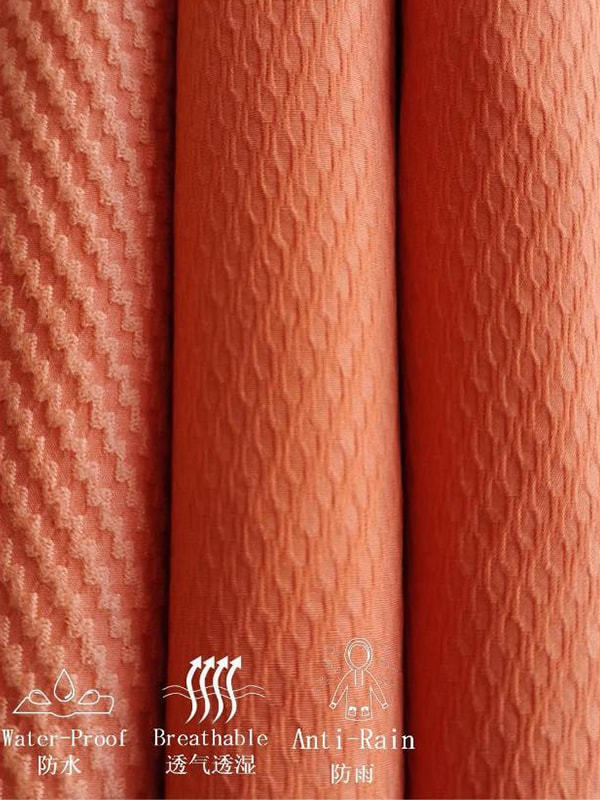
For outdoor enthusiasts and professionals, gear must be a reliable second skin. A durable mechanical stretch fabric for outdoor gear is essential for jackets, pants, and climbing apparel where freedom of movement is critical, and conditions are harsh. These fabrics must stretch with the body during a climb or hike while resisting abrasion from rocks, branches, and pack straps. Critically, they must also maintain compatibility with durable water repellent (DWR) finishes and laminates without the stretch component degrading from UV exposure or temperature extremes. Mechanical stretch, with its inherent resistance to these factors, allows for the creation of durable, weather-resistant soft shells and stretch-woven outer layers that outperform elastane-based alternatives in longevity and weather protection.
Performance Requirements for Outdoor Applications
Outdoor fabrics need a complex combination of stretch, tear strength, weather resistance (wind/water), breathability, and lightweight packability. The stretch component must not be the weak link in this performance matrix.
Ideal Mechanical Stretch Fabrics for Outdoor Use
- Weather-Resistant Stretch Woven Fabrics: Tightly woven nylons or polyesters with mechanical stretch yarns, often finished with a DWR treatment. These provide excellent wind resistance, light shower protection, and high breathability for active use.
- Breathable and Quick-Drying Stretch Knits: For base layers or active mid-layers, knitted fabrics from textured polyester yarns offer four-way stretch, moisture-wicking, and rapid drying, all with superior heat resistance compared to spandex knits.
FAQ
Does mechanical stretch fabric lose its elasticity over time?
High-quality mechanical stretch fabric exhibits excellent long-term elasticity retention. Because the stretch is physically engineered into the yarn's structure and heat-set, it is less prone to the polymer fatigue that affects elastane. With proper care, it maintains its recovery far longer than spandex blends, especially when exposed to factors like heat, sunlight, or chlorine. The primary cause of elasticity loss would be physical damage to the yarns themselves (e.g., from severe abrasion or cuts), not degradation of the stretch mechanism.
Can mechanical stretch fabrics be washed in hot water or ironed?
Yes, this is one of their key advantages. Mechanical stretch fabrics, typically based on polyester or nylon, can generally withstand higher washing and ironing temperatures than fabrics containing spandex. Always check the specific care label, but they are designed for durability and are often suitable for industrial laundering cycles. The heat setting during manufacturing ensures the stretch memory is stable at elevated temperatures that would permanently damage elastane fibers.
What is Polyester T400, and is it a mechanical stretch fabric?
Polyester T400 is a premier example of engineered mechanical stretch fabric technology. It is a bi-component filament made from two different polyester polymers that shrink at different rates when heated. This differential shrinkage creates a permanent, helical crimp in the fiber, resulting in exceptional stretch and recovery without any elastane. Fabrics made with T400 offer durable, consistent stretch, excellent washability, and a comfortable hand, making them ideal for durable sportswear, workwear, and fashion.
How do I choose between a woven and a knit mechanical stretch fabric?
The choice depends on the desired application and properties. Woven mechanical stretch fabrics (e.g., stretch twills, canvases) offer more structure, stability, and wind resistance. Their stretch is often more directional. They are ideal for tailored pants, jackets, uniform shirts, and durable outdoor shells. Knit mechanical stretch fabrics offer multidirectional (four-way) stretch, superior drapability, and often greater breathability. They are better suited for polo shirts, performance base layers, casual tops, and any application requiring maximum conformability.
Is mechanical stretch fabric more expensive than spandex-blend fabric?
Initially, the cost of high-performance mechanical stretch fabric can be higher due to the advanced yarn texturing and precise manufacturing required. However, a true cost analysis must consider total cost of ownership. The superior durability, longevity, and resistance to degradation mean garments last longer, reducing replacement frequency. For applications in workwear, uniforms, or high-performance outdoor gear where garment failure is costly, mechanical stretch often proves to be the more economical choice over the product's lifecycle.
Contact Us for More Details
Don't hesitate to contact when you need us!
Product Categories
Contact Information
-
NO.1 Huanhu Road(Building I)Pingwang, Wu Jiang, Suzhou, Jiangsu, China
-
+86-13962557213
-
+86-512-80739991-801
-
+86-512-80739990
