

 English
 中文简体
中文简体
What Is That Stretchy Fabric Called? Complete Guide to Stretch Material Names
2026-09-10
In an outdoor gear store, you pick up a mountaineering jacket and spot "T400 stretch" on the hangtag. Beside it, a yoga layer reads "four-way stretch." Across the aisle, a casual polo claims "mechanical stretch." The same question surfaces every time: what is that stretchy fabric called? The answer depends on the supplier, the weaving process, and the region. This guide decodes those textile names from a buyer's perspective, so you can recognize what a fabric truly is before you place an order.
Content
- 1 What Is the Stretchy Fabric Called?
- 2 How Fabric Gets Its Stretch: Knit vs Woven
- 3 Stretch Fabric Names You Should Know
- 4 How to Choose the Right Stretch Fabric
- 5 What Does Four-Way Stretch Really Mean?
- 6 Mechanical Stretch: A Different Way to Achieve Elasticity
- 7 How to Care for Stretch Fabrics
- 8 Frequently Asked Questions
What Is the Stretchy Fabric Called?
Stretch fabric is called elastane, spandex, or simply stretch material, and the exact term depends on the regional standard and the supply chain.
When you compare fabric suppliers, you will see three naming systems. Europe and ISO standards call the fiber elastane. North American mills call it spandex. In trade documentation, both are labeled as "stretch fabric," but the underlying chemistry is identical: a polyurethane-based elastic fiber. What separates suppliers is the weave construction and the percentage of elastic fiber used.
Stretch fabric definition: A textile that extends beyond its resting length under force and returns to its original dimensions after the force is removed. Stretch is achieved either with elastic fibers or through fabric construction.
| Term You'll See | Region / Context | What It Actually Describes |
| Elastane | European labels, ISO standards | The elastic fiber itself |
| Spandex | North American labels | The same elastic fiber, different name |
| Stretch fabric | Garment tags, trade language | Any fabric that stretches and recovers |
| Mechanical stretch | Technical specs | Stretch from weave structure, no spandex |
How Fabric Gets Its Stretch: Knit vs Woven
Fabric gets its stretch in two ways: knit construction, where looped yarns provide natural elasticity, or woven construction, where elastic fibers or engineered yarns create the stretch.
Knit fabrics stretch because the loops physically open when pulled. Fleece, jogger knits, and seamless activewear rely on this mechanism. Woven fabrics, by contrast, have a rigid crosshatch structure. To make them stretch, manufacturers add spandex/elastane in the weft, use T400 or T800 composite yarns, or apply mechanical stretch technology. That is why outdoor shell jackets use woven stretch fabrics, while compression leggings use knits or high-stretch wovens.
Knit Stretch
- Stretch from loop structure
- Natural elasticity in multiple directions
- Softer hand feel, lower stiffness
Woven Stretch
- Stretch from fiber or weave
- Engineered stretch in specific directions
- Stable and durable, better recovery
Stretch Fabric Names You Should Know
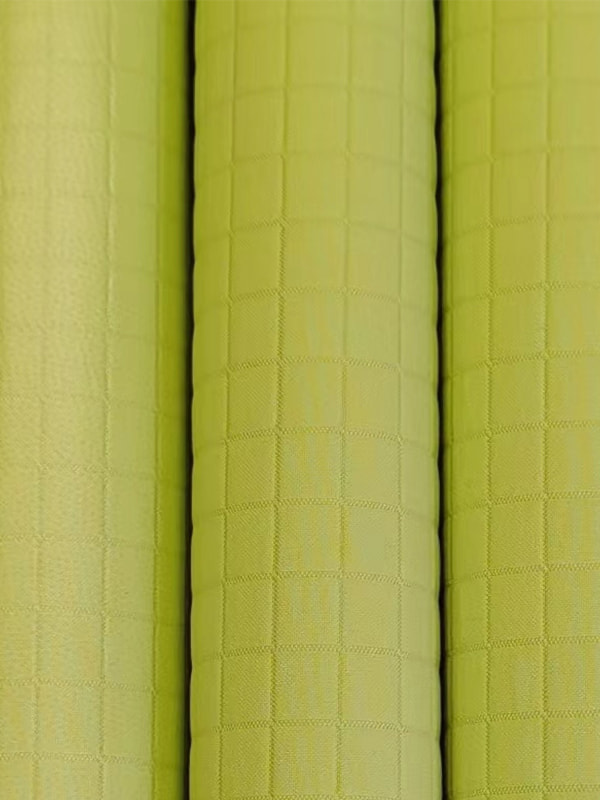
 2/1 Twill T400 Stretch Fabric with Air-Textured Yarn for TrousersThis twill fabric combines T400 stretch yarns with air-textured processing, offering a soft hand, shape retention, and water resistance. Suitable for business-casual trousers where comfort and durability are needed.View Product →
The names you see most often on garment labels are elastane, spandex, T400, T800, and mechanical stretch; each reflects a different elastic mechanism.
T400 is not spandex. It is a wavy cross-section composite fiber with superior recovery and chlorine resistance. T800 is a newer two-way elastic fiber used in lightweight shells. Mechanical stretch is different: it uses no elastic fiber at all. Instead, high twist, weave geometry, and heat-setting create the stretch, making the fabric fully recyclable. Four-way stretch is not a fiber, either. It describes a directional property—the fabric stretches in both warp and weft.
- Elastane / Spandex — The base elastic fiber, blended with nylon or polyester at 5–20%.
- T400 — Wavy cross-section fiber with high recovery and chlorine resistance.
- T800 — Two-way elastic fiber for thin, low-transparency outer fabrics.
- Mechanical stretch — Spandex-free stretch from weave structure.
- Four-way stretch — Directional specification, not a fiber type.
95%
Recovery rate of elastane blends after 50 washes
90%
Recovery rate of T400 fabrics in the same test
0
Spandex content in mechanical stretch
5–20%
Elastane ratio in most stretch blends
How to Choose the Right Stretch Fabric
Choose stretch fabric by stretch percentage, recovery rate, and application environment—not by the tag name alone.
A buyer's mistake is ordering by "stretch" without checking the recovery target. For garments that need to survive repeated washing, the recovery rate must stay above 85% after 50 wash cycles. Functional fabric mills such as Suzhou Redcolor International Trading Co., Ltd. (redcolortex.com) use this standard as a minimum for their stretch wovens, including T400 and mechanical stretch ranges.
| Application | Recommended Stretch Fabric | Stretch Range | Recovery Target |
| Yoga and activewear | Four-way stretch knit or woven | 200–250% | 85%+ |
| Outdoor shells | Double-weave T400/T800 | 30–100% | 90%+ |
| Daily casual wear | Mechanical stretch | 40–80% | 80%+ |
| Swimwear | Elastane blends | 200–300% | 95%+ |
For mountaineering apparel, double-woven fabric with T400 or T800 yarns gives the best balance of stretch and abrasion resistance.
What Does Four-Way Stretch Really Mean?
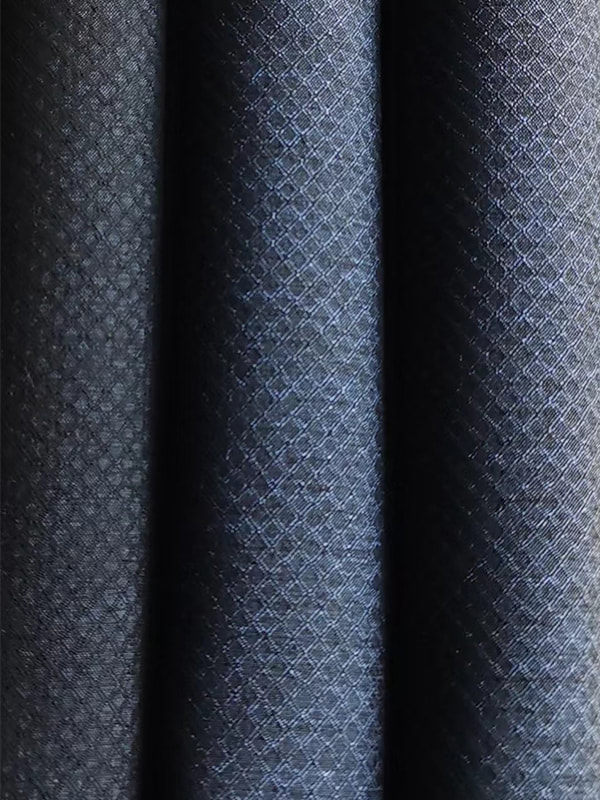
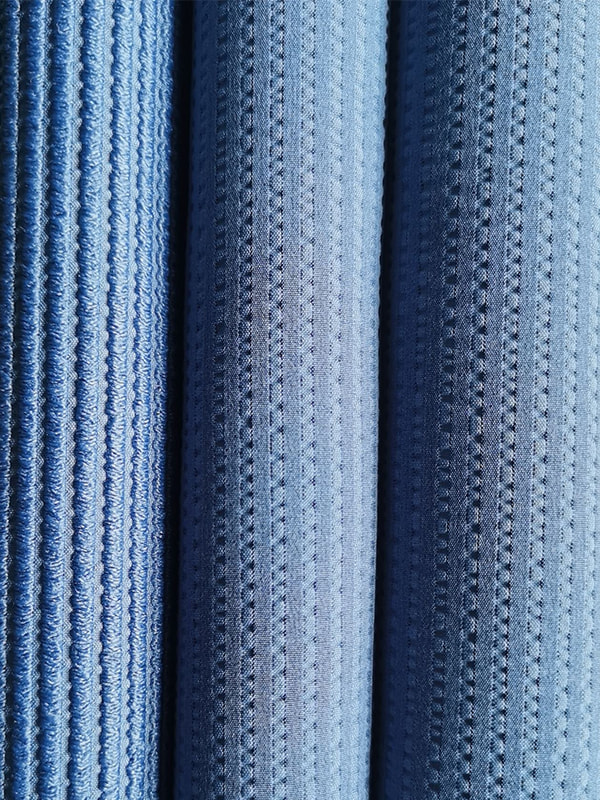 75/400 Composite Silk Twill Four-Way Stretch Fabric for MountaineeringA double-woven fabric featuring 75D/400D composite yarns that provides four-way stretch and abrasion resistance, ideal for technical mountaineering garments requiring mobility and toughness.View Product →
Four-way stretch means the fabric stretches in both warp and weft directions, allowing movement on every axis.
A four-way stretch fabric may extend 80% in the warp and 120% in the weft, then return to nearly its original size. This is critical for yoga pants, climbing pants, and running tights, where leg lifting, lateral shifts, and stride extension create multi-directional forces. Suppliers achieve this with 75D or 100D polyester yarns and elastic fibers in both directions, or through double-weave construction.
Mechanical Stretch: A Different Way to Achieve Elasticity
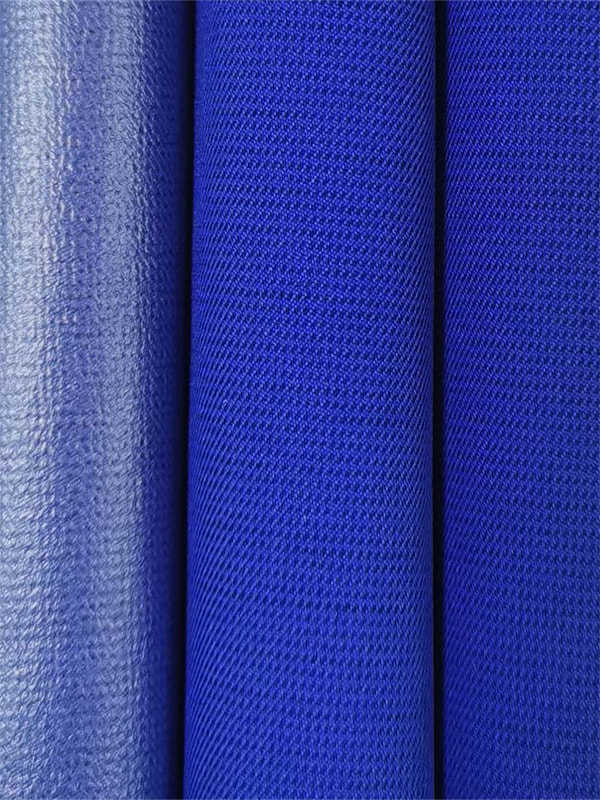
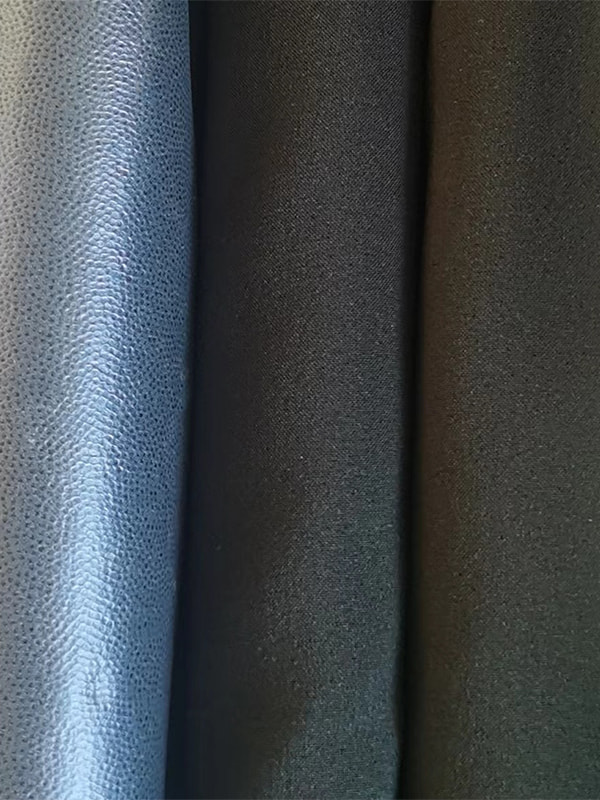 75D Plain Weft Ultra-High Elastic Mechanical Stretch Fabric with TPU CoatingThis mechanical stretch fabric uses a plain weave with 75D yarns to achieve high elasticity without spandex. The TPU coating adds low transparency, making it suitable for protective or outerwear applications.View Product →
Mechanical stretch fabric gets its elasticity from the weave structure and yarn geometry, not from spandex.
In mechanical stretch, yarns are crimped or twisted into a wavy geometry and heat-set so the fabric holds its stretch in the weft direction. This is popular for daily casual wear, where UV and chlorine resistance matter more than maximum stretch. Because there is no polyurethane fiber, mechanical stretch fabrics are easier to recycle and they avoid the "spandex aging" problem that causes leggings to go baggy after a year. One notable technical direction is spandex-free stretch, which a leading article on mechanical stretch fabric explains in more detail.
How to Care for Stretch Fabrics
Stretch fabrics last longest when washed in cold water, dried flat, and stored folded.
- Wash below 30°C to preserve elastic fiber recovery.
- Do not tumble dry; heat degrades spandex and elastane.
- Store folded, not hung, to prevent sagging in stretch areas.
- Skip fabric softener; the coating reduces elasticity.
Frequently Asked Questions
Is spandex the same as elastane?
Yes. "Spandex" is the North American term. "Elastane" appears in European and ISO labeling. Both refer to the same polyurethane elastic fiber.
What is the most stretchy fabric?
Knit fabrics containing 20% or more spandex/elastane are the most stretchy, reaching 200–300% elongation. Recovery, however, is what determines real wear comfort.
Does T400 stretch better than spandex?
T400 offers similar elasticity with better recovery and chlorine resistance. But high-spandex knits still reach higher maximum elongation.
How can I tell if a fabric is mechanical stretch?
Stretch it and watch the direction. Mechanical stretch normally extends in one direction only. Look at the yarn structure: wavy or crimped patterns appear instead of an added elastic fiber.
The next time you see "stretch" on a fabric, ask what kind of stretch it is. Elastane and spandex are the same fiber under different names. T400 and T800 are engineered elastic yarns with specific recovery profiles. Mechanical stretch is a construction method that removes spandex entirely. These distinctions decide how a fabric performs, how it ages, and how it fits your product line.


Contact Us for More Details
Don't hesitate to contact when you need us!

Product Categories
Contact Information
-
NO.1 Huanhu Road(Building I)Pingwang, Wu Jiang, Suzhou, Jiangsu, China
-
+86-13962557213
-
+86-512-80739991-801
-
+86-512-80739990
