
 English
 中文简体
中文简体
Is Mechanical Stretch Polyester the Right Performance Fabric for Your Product Line?
2026-03-05
In the global performance apparel, outdoor gear, and workwear industries, stretch fabric technology has become a non-negotiable design parameter rather than a premium differentiator. Consumers and procurement teams alike now expect garments to move with the body, resist deformation under repeated stress cycles, and maintain dimensional integrity across the product lifecycle. Among the available stretch fabric technologies, mechanical stretch polyester has emerged as a technically sophisticated, cost-effective, and durability-optimized solution — one that delivers two-way or four-way stretch through yarn engineering and weave construction alone, without reliance on spandex (elastane) fibers that introduce chemical complexity, recycling barriers, and long-term elastic fatigue.
This article delivers a comprehensive, specification-grade analysis of mechanical stretch polyester technology — covering fiber architecture, yarn engineering, weave construction principles, performance testing standards, coating and functional finishing, and B2B OEM sourcing frameworks. It is designed for product development engineers, sourcing managers, and brand procurement teams who require technical depth to specify, evaluate, and source mechanical stretch polyester constructions with confidence.
Content
- 1 Step 1: Five High-Traffic, Low-Competition Long-Tail Keywords
- 2 Section 1: The Science of Stretch — How Mechanical Stretch Polyester Works
- 3 Section 2: Weave Construction Engineering for Mechanical Stretch Polyester
- 4 Section 3: T400 Mechanical Stretch Polyester Fabric — End-Use Applications and Performance Standards
- 5 Section 4: Functional Finishing for Mechanical Stretch Polyester
- 6 Section 5: Performance Testing Standards for Mechanical Stretch Polyester
- 7 Section 6: OEM Mechanical Stretch Polyester Fabric Supplier — Manufacturing Infrastructure and Sourcing Strategy
Step 1: Five High-Traffic, Low-Competition Long-Tail Keywords
| # | Long-Tail Keyword | Search Intent |
|---|---|---|
| 1 | T400 mechanical stretch polyester fabric | Technical specification / bicomponent fiber sourcing |
| 2 | mechanical stretch polyester for outdoor pants | Activewear / outdoor apparel B2B procurement |
| 3 | woven mechanical stretch polyester lining fabric | Jacket / outerwear lining specification |
| 4 | OEM mechanical stretch polyester fabric supplier | Private label / custom production sourcing |
| 5 | four-way mechanical stretch polyester fabric wholesale | Bulk procurement / activewear brand development |
Section 1: The Science of Stretch — How Mechanical Stretch Polyester Works
1.1 Mechanical Stretch vs. Chemical Stretch: Fundamental Distinction
Understanding mechanical stretch polyester begins with clearly distinguishing it from chemical stretch — the two fundamentally different pathways to stretch performance in woven polyester fabrics:
- Chemical stretch (spandex/elastane-based): Achieves elongation through the incorporation of elastomeric fiber — typically polyurethane-based spandex (Lycra®, Dorlastan®) — in the warp, weft, or both directions. Spandex content of 2–10% by weight provides 50–200% elongation with near-complete elastic recovery. Critical limitations: spandex degrades under chlorine bleach, repeated dry cleaning, and UV exposure; it forms a chemical composite with polyester that resists recycling separation (a growing regulatory concern under EU Textile Sustainability Regulation); and elastic fatigue over repeated stretch cycles causes permanent set (loss of recovery) after 50,000–100,000 cycles, reducing garment performance over its useful life.
- Mechanical stretch (structure-based): Achieves elongation through yarn engineering and weave geometry, without elastomeric fiber content. The stretch mechanism relies on crimped yarn geometry (textured polyester), bicomponent fiber spring-back (T400 and similar), or weave construction factors (crepe weave, loose sett) that allow controlled fabric deformation under applied force. Mechanical stretch polyester fabrics typically offer 15–35% elongation (two-way) or 20–40% elongation (four-way), with elastic recovery of 85–98% after standardized test cycles — adequate for the vast majority of activewear, outdoor, and workwear applications without the durability and recyclability limitations of spandex.
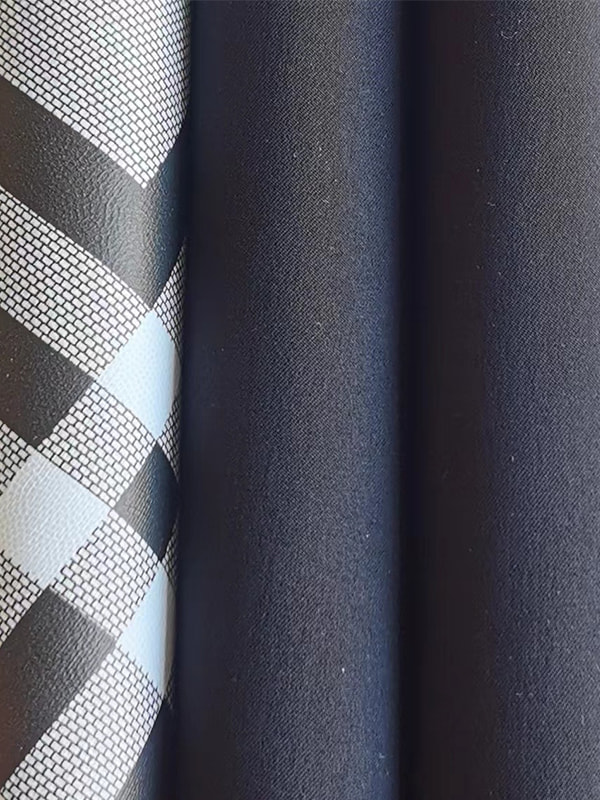
1.2 Yarn Engineering Mechanisms for Mechanical Stretch
The stretch performance of mechanical stretch polyester is built into the yarn before a single warp thread is placed on the loom. Three principal yarn engineering approaches are used commercially:
- Air-textured polyester (ATY): Multifilament polyester yarn passed through a high-velocity air jet that creates random loops, kinks, and entanglements in the filament bundle. The resulting yarn has a bulkier, more irregular profile than flat multifilament, with inherent crimp that compresses under applied force and recovers elastically on release. ATY stretch: 15–25% elongation, recovery 85–92%. Lower cost than bicomponent fiber; less consistent stretch performance lot-to-lot due to air-texturing variability. Commonly used in lining fabrics and lower-specification mechanical stretch polyester for outdoor pants.
- Draw-textured yarn (DTY / false-twist textured): The dominant production method for textured polyester yarn globally. Polyester multifilament yarn is simultaneously drawn (elongated under heat to orient molecular chains) and false-twisted (temporary twist applied by a friction disc, then released before yarn winds onto package). The released false-twist creates a stable helical crimp in each individual filament. DTY stretch: 20–35% elongation (warp-inserted DTY); recovery 90–96%. Highly consistent lot-to-lot. The base yarn for the majority of mechanical stretch polyester fabric constructions in activewear and outdoor apparel. Suzhou Redcolor's integrated texturing capability — processing raw polyester POY (partially oriented yarn) through in-house texturing equipment — enables precise control of DTY crimp parameters (draw ratio, D/Y ratio, heater temperature) that determine the fabric's final stretch performance.
- Bicomponent fiber (T400 and conjugate spinning): The premium tier of mechanical stretch polyester technology. Two polymer components — typically PET (polyethylene terephthalate) and PTT (polytrimethylene terephthalate), or PET and PBT (polybutylene terephthalate) — are co-extruded from the same spinneret in a side-by-side or sheath-core configuration. The differential thermal shrinkage between the two polymer components during heat treatment causes the fiber to develop a three-dimensional helical crimp, functioning as a molecular-scale coiled spring. T400 (Invista's brand name for PET/PTT bicomponent) is the most widely recognized commercial specification. Elongation: 25–45% (two-way to four-way depending on construction); recovery: 95–99% after 10,000 stretch cycles — the highest durability elastic recovery available in woven textiles without spandex. Full polyester composition enables recycling via standard polyester streams.
1.3 T400 Bicomponent Fiber — Technical Architecture
T400 mechanical stretch polyester fabric represents the current technical benchmark for durable, high-recovery woven stretch performance. The molecular engineering behind its stretch mechanism:
- PET component: High-modulus component providing dimensional stability, UV resistance, and structural rigidity in the fiber cross-section. Tg (glass transition temperature): 67°C; crystalline melting point: 260°C.
- PTT component: Low-modulus, high-elastic-recovery component. PTT's methylene unit (three CH₂ groups vs. PET's two) creates a more flexible polymer backbone with a helical molecular conformation that acts as a spring at the molecular scale. PTT elastic recovery: 98% after 40% elongation (ASTM D3107). Tg: 45°C; melting point: 228°C.
- Side-by-side bicomponent architecture: The PET and PTT polymers are extruded from the same spinneret orifice in a side-by-side configuration, bonded along their shared interface. After spinning and heat treatment, differential shrinkage between PET (higher shrinkage) and PTT (lower shrinkage) causes the fiber to curl into a stable three-dimensional helix — functioning as a coiled spring with permanent elastic memory. Crimp frequency: 8–15 crimps per cm; crimp amplitude: 0.3–0.8 mm in relaxed state.
- Performance comparison vs. DTY and spandex:
Parameter DTY Polyester T400 Bicomponent Spandex (2% content) Elongation (warp/weft) 20–30% / 15–25% 30–45% / 25–40% 50–120% / 40–100% Elastic recovery (after 10,000 cycles) 88–93% 95–99% 85–94% Chlorine resistance Excellent Excellent Poor (degrades >20 ppm) Recyclability Standard PET stream Standard PET stream Composite — not recyclable Dry cleaning resistance Excellent Excellent Moderate (limited cycles) Relative cost vs. DTY baseline 1.0× 1.8–2.5× 1.3–1.7× (blended yarn)
Section 2: Weave Construction Engineering for Mechanical Stretch Polyester
2.1 Two-Way vs. Four-Way Stretch Construction
The distinction between two-way and four-way stretch in mechanical stretch polyester fabric is determined by the direction(s) in which textured or bicomponent yarn is inserted into the weave structure:
- Warp-stretch (two-way, warp direction): Textured or T400 yarn used in warp direction only; standard flat multifilament or spun polyester in weft. Fabric stretches along the warp axis (typically parallel to garment length / vertical direction when worn). Preferred for trouser and pant applications where freedom of movement in the stride and knee-bend directions is the primary requirement. Warp-stretch fabrics are easier to weave and finish consistently at lower cost than four-way constructions.
- Weft-stretch (two-way, weft direction): Textured or T400 yarn in weft direction only. Fabric stretches laterally (across the warp). Common in shirt fabrics and fitted jacket constructions where lateral body movement (arm raise, torso twist) is the priority stretch direction.
- Four-way stretch: Textured or T400 yarn in both warp and weft directions. Fabric elongates and recovers in both length and width simultaneously. Maximum freedom of movement for high-activity applications (climbing pants, ski race suits, cycling bib shorts, tactical combat uniforms). Construction complexity and cost are higher — achieving balanced four-way stretch requires careful optimization of warp and weft yarn specifications, sett, and finishing protocols to avoid anisotropic stretch behavior (unequal elongation in warp vs. weft that distorts garment fit after movement).
- True four-way stretch (T400 warp + T400 weft): The premium configuration of T400 mechanical stretch polyester fabric, providing 30–45% elongation in both directions with 95–99% recovery. Used in the highest-performance outdoor and activewear applications. Suzhou Redcolor's integrated spinning-texturing-weaving production architecture enables this construction to be optimized within a single production system — avoiding the quality variation that arises when bicomponent yarn is sourced externally and woven at a separate facility without direct control over yarn quality parameters.
2.2 Weave Structure Selection for Stretch Optimization
The weave structure interacts with yarn crimp to determine the net stretch available in the finished fabric. Key structural variables:
- Plain weave: Maximum interlacing frequency — every warp crosses every weft. Highest cover factor, most stable construction. For mechanical stretch polyester, plain weave constrains crimp expression due to high yarn-to-yarn contact pressure — effective stretch is 20–30% lower than the yarn's potential crimp elongation. Used in lightweight stretch lining fabrics (75–120 g/m²) where dimensional stability is prioritized alongside moderate stretch.
- 2/1 and 2/2 twill: Longer float lengths reduce interlacing frequency vs. plain weave, allowing greater crimp expression. Twill-woven mechanical stretch polyester for outdoor pants achieves 8–15% more effective stretch at equivalent yarn specification vs. plain weave. The classic pant fabric construction — combining stretch performance, mechanical abrasion resistance (longer floats distribute wear across more fiber surface), and the aesthetically preferred diagonal rib surface of twill fabric.
- Satin and sateen weaves (4-shaft, 5-shaft, 8-shaft): Very long floats with minimal interlacing. Maximum crimp freedom — effective stretch 15–25% higher than twill at equivalent yarn spec. Surface dominated by warp or weft floats, producing the characteristic smooth, lustrous surface of satin-faced fabrics. Used in stretch lining fabrics, formal wear stretch fabrics, and performance windshells where low surface friction is a functional requirement.
- Dobby and crepe constructions: Irregular float patterns (dobby weave) or highly imbalanced S/Z twist yarn weave effects (crepe) create fabrics with increased thickness, lower modulus in the stretch direction, and softer hand relative to equivalent-weight regular weaves. Applicable in mid-weight stretch fabrics (180–260 g/m²) for lifestyle and athleisure applications where soft drape is as important as stretch performance.
2.3 Thread Count, Fabric Sett, and Stretch Performance
Fabric sett (the number of warp ends per cm × weft picks per cm) is a critical design parameter for mechanical stretch polyester fabrics. Higher sett (tighter construction) provides better cover factor, abrasion resistance, and tear strength, but suppresses stretch expression. Lower sett allows greater crimp freedom but risks structural instability, seam slippage, and inadequate mechanical strength:
- For mechanical stretch polyester for outdoor pants (mid-weight, 200–280 g/m²): typical optimized sett is 50–70 ends/cm × 35–55 picks/cm for 75D/72f DTY warp + 75D/72f DTY weft — delivering 25–35% four-way elongation with seam slippage resistance ≥200 N per ISO 13936-2.
- For T400 mechanical stretch polyester fabric in performance outerwear shells (120–180 g/m²): sett optimization using 50D/72f T400 warp + 50D/72f T400 weft typically targets 70–95 ends/cm × 55–75 picks/cm, achieving 30–40% elongation with recovery ≥97% per ASTM D3107.
- For woven mechanical stretch polyester lining fabric (ultra-lightweight, 60–100 g/m²): plain weave with 30–50 ends/cm × 25–40 picks/cm using 20D–30D DTY, targeting 20–30% warp stretch with minimal weight penalty for lining applications.
Section 3: T400 Mechanical Stretch Polyester Fabric — End-Use Applications and Performance Standards
3.1 Outdoor and Technical Apparel Applications
T400 mechanical stretch polyester fabric has become the reference specification for premium performance apparel in the outdoor, ski, golf, and cycling sectors. Key application profiles and their specification requirements:
- Technical hiking and climbing pants: Primary stretch requirement: freedom of knee bend (warp stretch ≥30%), lateral hip movement (weft stretch ≥25%). Additional requirements: abrasion resistance ≥30,000 Martindale cycles (ISO 12947-2) at knee and seat panels; tear strength ≥40 N (ISO 13937-2) in warp and weft; dimensional stability after 5× ISO 6330 laundering ≤±3% in warp and weft; DWR finish spray rating ≥80 (ISO 4920) initial, ≥70 after 20 wash cycles. Fabric weight: 180–260 g/m². Preferred construction: 2/1 or 2/2 twill with T400 warp (30–50D) + DTY weft (50–75D) or full T400 four-way.
- Ski and snowboard pants (shell fabric): Stretch requirement: ≥35% four-way elongation with ≥96% recovery (critical for snow sport range of motion — hip flexion to 120°, knee flexion to 135°). Waterproof rating: hydrostatic head ≥15,000 mm H₂O (ISO 811) for ski race; ≥10,000 mm for recreational use. MVP ≥10,000 g/m²/24hr (ISO 15496). Abrasion resistance ≥20,000 Martindale at edge contact zones. Coating system: TPU laminate or high-coat-weight solvent PU over T400 base fabric. Seam tape compatibility: thermoplastic seam tape applied with hot-air welding equipment.
- Golf and travel apparel: Primary requirement: low-extension, high-recovery four-way stretch for unrestricted shoulder rotation and leg swing without garment distortion during follow-through. T400 construction: 20–40% elongation, ≥98% recovery ideal for golf wear where repeated partial-extension cycles (golf swing: 30–40% shoulder extension) must not produce permanent set or visual deformation. Lightweight 120–160 g/m² T400 plain weave or satin construction provides desired aesthetic (smooth, technical appearance) with requisite mobility.
- Military and tactical workwear: Requirements converge on maximum durability: tear strength ≥80 N (ASTM D1424 Elmendorf), tensile strength ≥1,000 N/5cm (ASTM D5034), abrasion resistance ≥50,000 Martindale cycles for high-wear panels. Stretch enables freedom of tactical movement without adding weight or bulk. FR (flame retardant) treatment requirements: NFPA 2112 (flash fire protection) or EN ISO 14116 (limited flame spread) for specific applications — FR finish must be verified for compatibility with T400 bicomponent fiber chemistry before specification.
3.2 Woven Mechanical Stretch Polyester Lining Fabric — Technical Specification
Woven mechanical stretch polyester lining fabric is a specialized segment combining the light weight and smooth surface slip required of conventional lining with the stretch performance demanded by high-mobility outer shells. Key technical parameters:
- Weight range: 55–120 g/m². Lining must not add significant weight to the garment — typical target is ≤20% of shell fabric weight per unit area. This constrains yarn denier to 15D–40D range (fine-denier DTY or T400).
- Surface friction (dynamic coefficient of friction, ISO 8295): Maximum µk = 0.25 (face-to-face, DIN 53375 adapted) for easy donning and doffing, freedom of body movement within the outer shell, and reduced electrostatic charge generation. Calendered satin-weave polyester lining with silicone-based surface lubricant achieves µk 0.12–0.20 — the lowest friction available in woven polyester lining.
- Stretch compatibility with shell fabric: Lining stretch must match or exceed the shell fabric stretch in both warp and weft — a lining that restricts shell stretch defeats the purpose of a stretch outer. Typical requirement: lining elongation ≥ shell elongation + 5% in both directions, with recovery ≥ shell fabric recovery rate.
- Tensile and seam strength: Despite low weight, lining fabrics experience significant dynamic stress at underarm, shoulder, and body panel seams during high-movement activities. Minimum seam slippage resistance ≥150 N (ISO 13936-2) for activewear lining; ≥120 N for standard outerwear lining.
- Antistatic performance: Polyester lining fabric generates triboelectric charge during normal wear, causing clinging and discomfort. Antistatic finish (durable ionic or non-ionic antistatic agent, or carbon fiber incorporation in yarn at 0.5–2% content) is standard specification for premium outerwear lining. Requirement: surface resistivity ≤10⁹ Ω/sq (IEC 61340-2-3) or charge decay time ≤0.5 s (FTTS-FA-004).
Section 4: Functional Finishing for Mechanical Stretch Polyester
4.1 DWR and Waterproof Finishing on Stretch Fabrics
Applying DWR (Durable Water Repellency) and waterproof coating to mechanical stretch polyester introduces engineering challenges not present in non-stretch fabric finishing. The coating or membrane must accommodate the fabric's elongation without cracking, delaminating, or losing waterproof integrity at full extension:
- Elongation compatibility of coating systems: Standard acrylic back-coating fails at 15–20% elongation due to its high glass transition temperature (Tg ~+5°C) and low elastic modulus. PU coating (Tg −30°C to −50°C for soft-segment PU formulations) elongates without cracking to 50–80% — compatible with all mechanical stretch polyester elongation ranges. TPU laminate film (elongation to break: 300–600% depending on formulation) is fully compatible with four-way stretch and maintains hydrostatic head ≥5,000 mm H₂O at 100% elongation — the preferred coating system for premium stretch outerwear shells.
- Stretch recovery effect on coating adhesion: Repeated stretch cycling (compression/extension cycles) generates fatigue stress at the coating-fabric interface. Peel strength of PU coating on T400 mechanical stretch polyester fabric should be tested before and after 10,000 stretch cycles to the specified elongation level — minimum acceptable peel strength retention: ≥80% of initial value (ISO 2411 knife peel method).
- PFAS-free DWR on stretch fabrics: Fluorine-free DWR (wax-based, dendrimer-based, or PDMS-based alternatives) has been validated on non-stretch polyester but requires specific optimization for stretch substrates — stretch cycling causes micro-cracking in some wax-based DWR films, creating hydrophilic channels. Dendrimer-based and PDMS-based fluorine-free DWR systems show superior durability on stretch fabrics: spray rating retention after 20 wash cycles + 100 stretch cycles (40% elongation): 70–80 (ISO 4920) vs. 50–65 for wax-based systems on equivalent stretch fabric.
4.2 Heat Setting — The Critical Finishing Step for Stretch Stability
Heat setting is the most consequential finishing step for mechanical stretch polyester fabric. The process applies controlled heat (typically 160–195°C for polyester) under controlled tension on a stenter frame, permanently establishing the fabric's relaxed dimensions, stretch elongation level, and recovery rate:
- Temperature effect: Higher setting temperature increases crystallinity of the polyester molecular structure, reducing creep tendency (permanent elongation under sustained low load) and improving dimensional stability. However, excessive temperature (above 200°C for standard PET; above 185°C for PTT component in T400) can damage the bicomponent fiber's crimp architecture, permanently reducing stretch. Optimal heat setting temperature for T400-based fabrics: 170–185°C, 30–45 seconds dwell time.
- Overfeed and underfeed control: Stenter overfeed (fabric fed faster than it exits the stenter) sets the fabric in a relaxed, wider state — maximizing weft stretch expression and reducing fabric weight per linear meter. Stenter underfeed (fabric stretched during setting) locks in a stretched state — stabilizing dimensions but suppressing available stretch. For four-way mechanical stretch polyester fabric wholesale, overfeed of 10–15% in warp is typically specified to maximize stretch expression while maintaining width consistency.
- Shrinkage performance after heat setting: Properly heat-set mechanical stretch polyester fabric should achieve dimensional stability of ≤±2.0% after 5× ISO 6330 laundering (40°C, gentle cycle) — the standard specification for activewear and outdoor apparel. Inadequate heat setting (too-low temperature or too-short dwell) produces fabrics that continue to shrink in consumer use, causing garment fit distortion and generating significant quality complaints.
Section 5: Performance Testing Standards for Mechanical Stretch Polyester
5.1 Stretch and Recovery Testing Protocol
Standardized stretch and recovery testing is essential for specification-driven procurement of mechanical stretch polyester. The most widely referenced standards:
- ASTM D3107 (Standard Test Methods for Stretch Properties of Woven Fabrics): The primary US standard for woven stretch fabrics. Tests elongation under a defined load (typically 4.44 N or 9 N for medium-weight fabrics), growth (permanent deformation after relaxation), and recovery rate. Target values for T400 mechanical stretch polyester fabric: elongation ≥25% at specified load; growth ≤3%; recovery ≥97%.
- ISO 14704-1 (Determination of Stretch and Recovery of Woven Fabrics): The European equivalent, using a strip specimen (50 mm × 300 mm) subjected to a defined load or elongation target. Recovery measured after 1-hour relaxation. Specifies both immediate and delayed recovery — delayed recovery (after 1 hour unloaded) is the more demanding and more practically relevant measure for garment performance.
- BS 4294 (UK standard — now largely superseded by ISO 14704): Still referenced by some British and Hong Kong brands. Tests 3× extension-recovery cycles to defined elongation level, measuring residual set (permanent elongation) and recovery rate at each cycle. Particularly relevant for evaluating long-term elastic fatigue behavior of mechanical stretch polyester vs. spandex-based alternatives.
- Repeat cycle testing (10,000 cycles — brand-specific protocols): Leading outdoor brands (Gore, Arc'teryx, Salewa) specify custom multi-cycle stretch testing at 30–50% elongation for 10,000 cycles to evaluate fatigue behavior of stretch fabrics. T400 mechanical stretch polyester fabric should demonstrate ≤5% reduction in elongation force and ≤2% increase in permanent set over this test protocol — significantly better fatigue durability than spandex equivalents (typically 10–20% reduction in elongation force after 10,000 cycles).
5.2 Full Performance Test Matrix for Outdoor Application Qualification
| Test Parameter | Test Method | Minimum Spec (Standard) | Minimum Spec (Premium Outdoor) |
|---|---|---|---|
| Elongation (warp/weft) | ASTM D3107 / ISO 14704-1 | ≥20% / ≥18% | ≥30% / ≥25% |
| Recovery after 3 cycles | ASTM D3107 | ≥90% | ≥97% |
| Tensile strength (warp/weft) | ISO 13934-1 | ≥600 N / ≥500 N | ≥900 N / ≥800 N |
| Tear strength | ISO 13937-2 | ≥30 N | ≥55 N |
| Abrasion resistance | ISO 12947-2 (Martindale) | ≥15,000 cycles Grade 3 | ≥30,000 cycles Grade 3 |
| Dimensional stability (after 5× wash) | ISO 6330 / ISO 5077 | ≤±3.0% warp/weft | ≤±2.0% warp/weft |
| Pilling resistance | ISO 12945-2 | Grade 3 after 2,000 cycles | Grade 4 after 5,000 cycles |
| Colorfastness to washing | ISO 105-C06 | Grade 3–4 | Grade 4–5 |
| Colorfastness to light | ISO 105-B02 (xenon arc) | Grade 4 / 40 hr | Grade 4–5 / 80 hr |
| DWR spray rating (initial) | ISO 4920 | ≥80 | ≥90 |
| DWR after 20 wash cycles | ISO 4920 post ISO 6330 | ≥70 | ≥80 |
| Hydrostatic head (if coated) | ISO 811 | ≥3,000 mm H₂O | ≥10,000 mm H₂O |
Section 6: OEM Mechanical Stretch Polyester Fabric Supplier — Manufacturing Infrastructure and Sourcing Strategy
6.1 Integrated Production Architecture: Why It Matters for Stretch Fabric Quality
The quality consistency and customization depth available from an OEM mechanical stretch polyester fabric supplier is fundamentally determined by the degree of production integration — how many steps in the value chain from raw polymer to finished fabric are controlled within a single enterprise:
- Spinning integration: Manufacturers that spin their own POY (partially oriented yarn) from PET chip control the fundamental polymer quality parameters (intrinsic viscosity, titanium dioxide content, thermal stability) that determine DTY texturing consistency downstream. External yarn sourcing introduces lot-to-lot variability in crimp behavior — directly affecting fabric stretch consistency across production runs.
- Texturing integration: In-house DTY texturing (false-twist texturing of POY) allows real-time adjustment of draw ratio, D/Y ratio (disk-to-yarn surface speed ratio), and primary/secondary heater temperatures that govern crimp frequency, crimp stiffness, and yarn residual shrinkage — the parameters that determine fabric stretch performance. Mills sourcing textured yarn externally have no ability to specify or adjust these parameters, accepting whatever the yarn supplier produces within their standard tolerances.
- Weaving integration: Direct connection between texturing output and weaving floor eliminates the intermediate conditioning and rewinding steps that introduce crimp relaxation. Yarn woven directly from in-line production maintains crimp integrity and produces more consistent fabric stretch performance than yarn stored and transported before weaving.
- Finishing integration: In-house heat setting, DWR application, coating, and calendering within the same enterprise enables the iterative optimization of finishing parameters against fabric stretch performance in real-time development cycles — a critical advantage for custom product development programs.
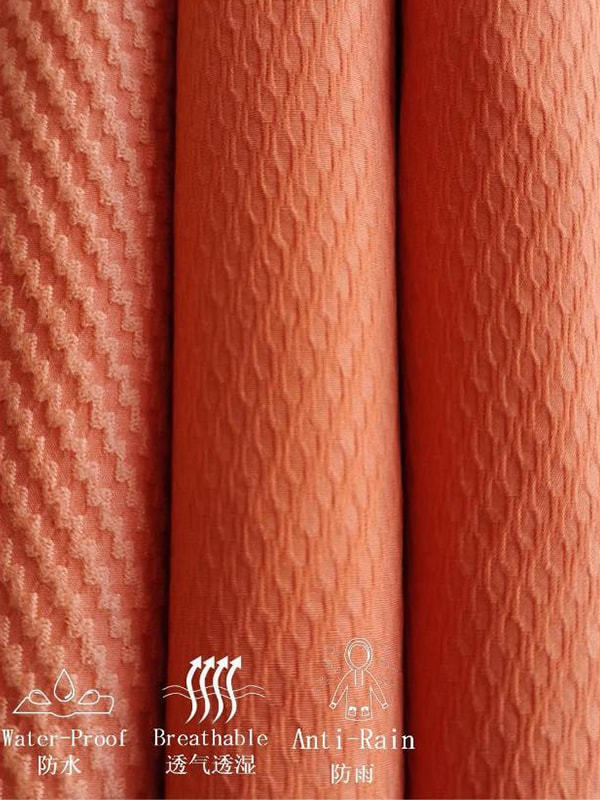
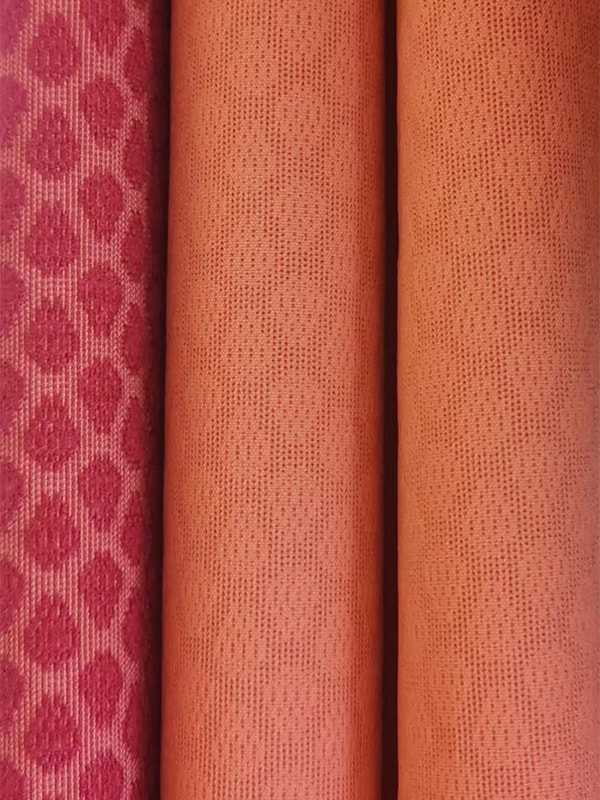
Contact Us for More Details
Don't hesitate to contact when you need us!
Product Categories
Contact Information
-
NO.1 Huanhu Road(Building I)Pingwang, Wu Jiang, Suzhou, Jiangsu, China
-
+86-13962557213
-
+86-512-80739991-801
-
+86-512-80739990
