

 English
 中文简体
中文简体
Mechanical Stretch vs. 4-Way Stretch: Selecting the Right Workwear Uniform Fabric
2026-10-01
Choosing between mechanical stretch and 4-way stretch is one of the most important fabric decisions for workwear and corporate uniform programs. These two fabric families look similar on a rack, but they behave differently under repeated movement, industrial laundering, and demanding job conditions. A wrong choice can lead to bagging knees, misshapen collars, or premature wear. In this guide, we compare mechanical stretch vs. 4-way stretch, explain how each fabric is made, and provide a practical framework for selecting durable, comfortable workwear and corporate uniform fabrics.
At Redcolor Textile, we focus on producing functional fabrics for workwear, outdoor apparel, and uniform programs. Our mechanical stretch and four-way stretch collections are engineered to balance elasticity, recovery, durability, and professional appearance. The following sections break down the differences and explain how to evaluate them for your own garment program.
Content
What Is Mechanical Stretch Fabric?
Mechanical stretch fabric, also called mechanical elastic fabric, achieves elasticity through physically textured synthetic yarns such as T400 or T800. Rather than containing spandex, these yarns are processed with coiled or crimped filaments. When the fabric is stretched, the coils open; when tension is removed, the filaments return to their original configuration.
Because no elastane is involved, mechanical stretch offers a crisp, stable hand and exceptional resistance to chlorine, bleach, heat, and ultraviolet light. For uniforms that require industrial laundering or outdoor exposure, this is a major advantage. The fabric can be engineered as weft stretch or as a two-way stretch depending on the weave structure and yarn selection.
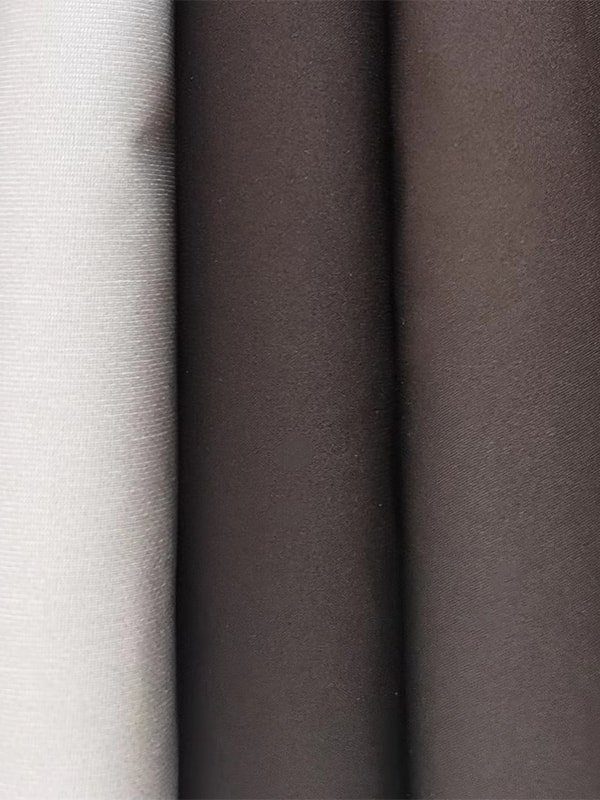
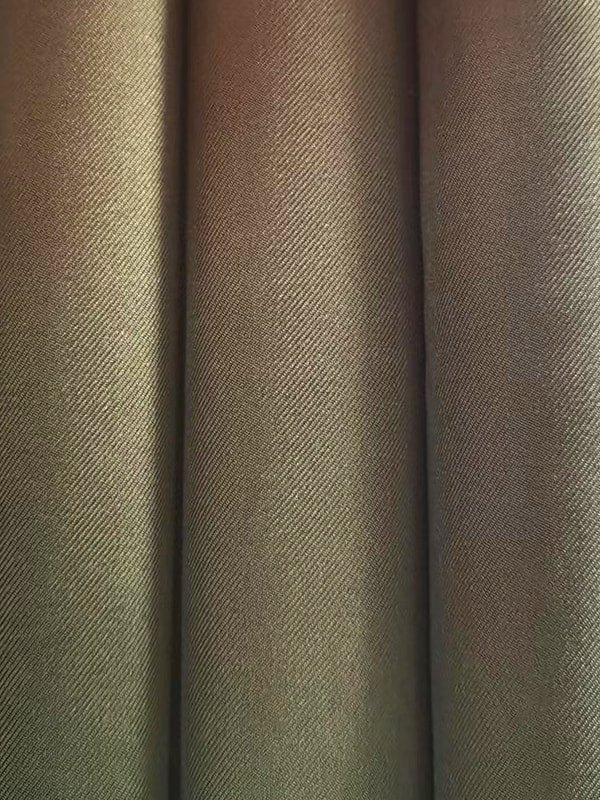 75D 2/2 Twill Mechanical Stretch Fabric for OuterwearThis mechanically stretched twill offers a crisp, stable hand without elastane, resisting chlorine, bleach, heat, and UV. Ideal for uniforms needing industrial laundering or outdoor wear, and suitable for spring-autumn jackets.View Product →
What Is 4-Way Stretch Fabric?
4-way stretch fabric stretches in both the warp and weft directions, allowing the garment to move freely through the full range of body motion. This two-dimensional elasticity can come from spandex core-spun yarns, mechanical stretch yarns, or a combination of both. The resulting fabric feels softer and more supple than a typical mechanical stretch construction.
In workwear, four-way stretch reduces resistance when bending, reaching, and squatting. It also helps the garment maintain close contact with the body without uncomfortable pulling. However, the choice of elastic yarn, knit or weave density, and finishing treatment will determine how well the fabric holds its shape after many wear and wash cycles.
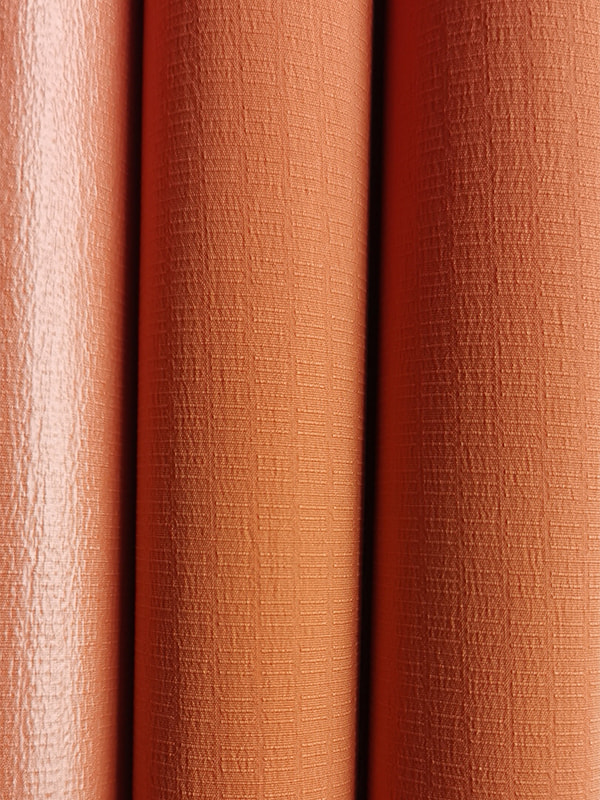
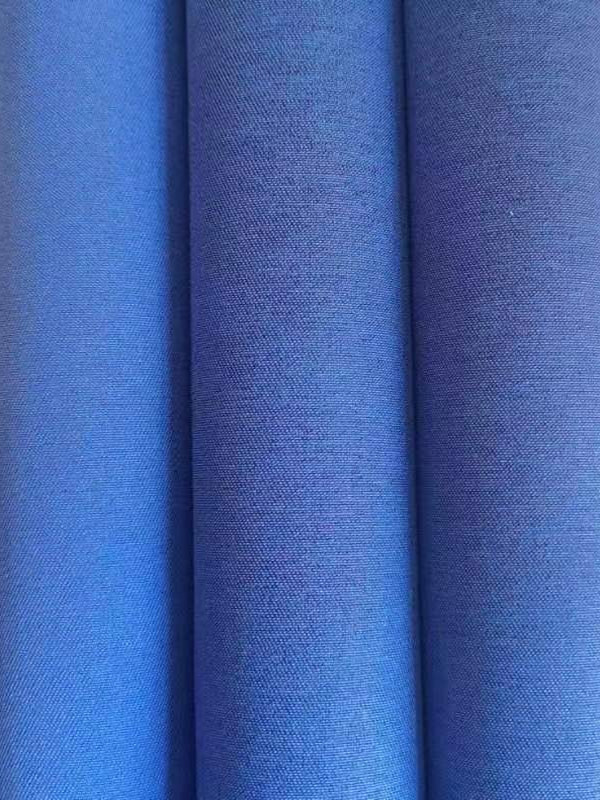 Recycled Cationic Polyester 2/1 Twill Four-Way Stretch FabricWith 94% recycled content and spandex, this four-way stretch twill moves freely in all directions, reducing resistance during bending and squatting. It maintains close body contact for workwear while supporting a lower environmental footprint.View Product →
Mechanical Stretch vs. 4-Way Stretch: Key Differences
The most useful comparison is not about which fabric is newer or more popular, but about how each behaves in a uniform application. The table below summarizes the main technical distinctions.
| Property | Mechanical Stretch | 4-Way Stretch |
|---|---|---|
| Stretch direction | Can be weft or warp/weft depending on construction | Always warp and weft |
| Elasticity source | Textured synthetic yarns such as T400 and T800 | Spandex, mechanical stretch yarns, or a combination |
| Elastic recovery | Excellent after repeated stretching and washing | Good to excellent, depending on spandex quality and content |
| Durability | High resistance to chlorine, heat, UV, and industrial washing | Spandex can degrade under high heat, chlorine bleach, and harsh detergents |
| Hand feel | Crisp, structured, and stable | Soft, supple, and flexible |
| Best use in uniforms | Tailored trousers, blazers, dress shirts | High-mobility work pants, coveralls, fitted polo shirts |
Neither construction is automatically better. A corporate blazer may benefit from the crisp structure of mechanical stretch, while a warehouse uniform that demands deep forward bends will feel more comfortable in a four-way stretch fabric. For a deeper explanation of how four-way stretch performs in daily wear, see our four-way stretch fabric guide.
How to Choose the Right Fabric for Workwear and Corporate Uniforms
Selecting between mechanical stretch and 4-way stretch requires more than reading a stretch percentage. The intended movement, laundering routine, climate, and required lifespan all play a role. Use the following checklist as a starting point.
- Task mobility: If employees bend, stretch, or lift repeatedly, choose four-way stretch or a bi-stretch mechanical fabric with strong weft elasticity.
- Fit and formality: Tailored uniforms with sharp lines benefit from mechanical stretch because the fabric keeps its structure after laundering.
- Abrasion resistance: For trousers and coveralls, check Martindale abrasion results and consider twill weaves for a denser, more durable surface.
- Elastic recovery: Ask suppliers for recovery data after repeated stretching. Good recovery prevents baggy knees and sagging elbows.
- Laundering and chemical exposure: For industrial laundering or chemical contact, select chlorine-resistant mechanical stretch rather than spandex-based fabrics.
- Comfort and breathability: Evaluate air permeability and moisture management, especially for employees who are active for long shifts.
Before approving a fabric, order development samples, sew trial garments, and run a small field test with actual employees. This can reveal seam pucker, dye fading, or loss of stretch recovery that a data sheet may not show.
Why Fabric Construction Matters
The weave structure has a direct impact on how stretch fabric performs in uniforms. A 2/2 twill gives a dense, abrasion-resistant surface that hides creases and withstands daily friction. A cavalry twill offers a smooth, durable finish often used for formal workwear. A plain weave provides a cleaner, more balanced hand and is commonly used for shirts and light jackets.
Mechanical stretch fabrics can also be combined with double-weave technology to create hidden stretch zones or add insulation without bulk. Four-way stretch fabrics can be brushed for softness or laminated with TPU and PTFE membranes for protection in cold or wet environments. These construction choices are as important as the stretch mechanism itself because they determine how the garment looks and performs in the field.
Sustainability and Certifications
Uniform programs increasingly need to meet environmental and social expectations. Mechanical stretch fabrics offer a clear advantage in this area because they can use recycled polyester and do not rely on spandex, which is difficult to recycle. When the fabric also complies with Oeko-Tex Standard 100 and uses GRS-certified recycled yarns, it supports corporate sustainability goals without sacrificing durability.
Redcolor Textile has developed environmentally friendly stretch fabrics that meet these standards. Our plain-weave T400 stretch fabric is one example of a chlorine-resistant, mechanically stretchable material available with recycled content. It combines stable performance with a lower environmental footprint for workwear and uniform applications.
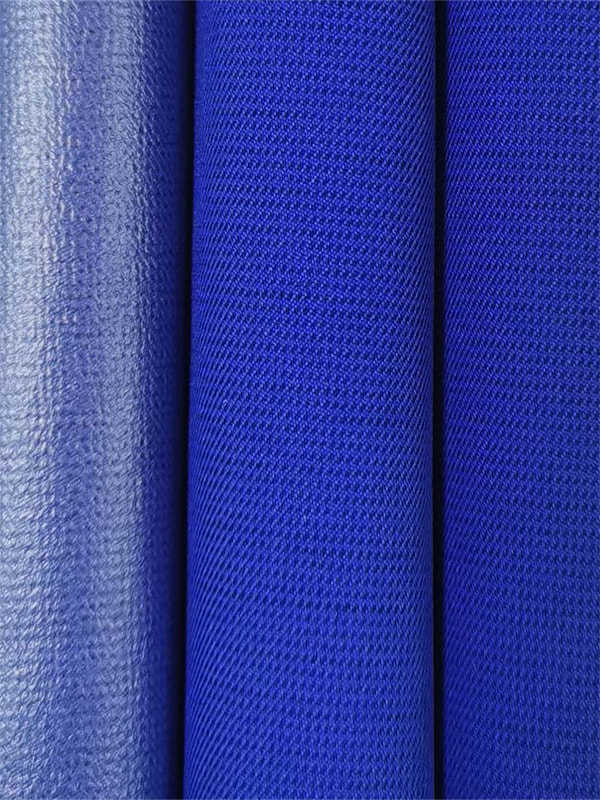
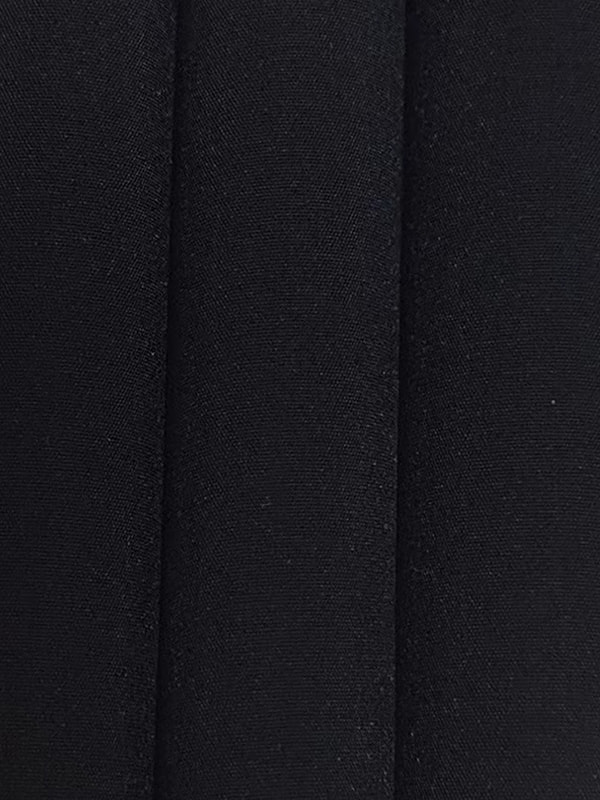 Plain Weave Recycled T400 Stretch FabricThis chlorine-resistant, mechanically stretchable fabric incorporates recycled yarns and stretches in both warp and weft. It combines stable performance with a reduced environmental impact, making it a practical choice for workwear and uniforms.View Product →
Frequently Asked Questions
Q1: Is 4-way stretch the same as mechanical stretch?
No. 4-way stretch describes the direction of elasticity, which is both warp and weft. Mechanical stretch describes the source of elasticity, which is textured synthetic yarns without spandex. A fabric can be both if it stretches in both directions using mechanical stretch technology.
Q2: Which fabric is more durable for workwear?
In general, mechanical stretch fabrics maintain their elasticity and shape better under repeated industrial laundering, chlorine exposure, and UV rays. That said, weave density, yarn quality, and fabric weight also influence durability. A high-quality four-way stretch fabric can be durable in less demanding environments, but its spandex component is more vulnerable to harsh care conditions.
Q3: Can mechanical stretch fabric be used for high-mobility uniforms?
Yes, if the mechanical stretch fabric is designed with sufficient weft or bi-directional stretch and good recovery. Some mechanical stretch constructions offer 20 to 30 percent elasticity and are already used in active workwear. It is important to review stretch and recovery performance before production.
Q4: Do stretch uniforms require special care?
Mechanical stretch fabrics generally survive regular and industrial laundering better than spandex-based fabrics. For four-way stretch containing spandex, avoid high temperatures, chlorine bleach, and aggressive tumble drying unless the fabric is designed for those conditions. Always follow the care label and supplier recommendations.
Both mechanical stretch and 4-way stretch have essential roles in modern workwear and corporate uniforms. If you need a structured, long-lasting fabric for tailored uniforms, mechanical stretch is a very strong candidate. If your team needs unrestricted movement and soft, pliable comfort, four-way stretch is often the better option.
The most successful uniform programs match fabric performance to real working conditions rather than following a trend. By partnering with an experienced functional fabric manufacturer, you can develop custom stretch solutions backed by testing, certification, and reliable production capacity. That partnership should begin with clear performance specifications and sample evaluation before scaling to full production.
Contact Us for More Details
Don't hesitate to contact when you need us!
Product Categories
Contact Information
-
NO.1 Huanhu Road(Building I)Pingwang, Wu Jiang, Suzhou, Jiangsu, China
-
+86-13962557213
-
+86-512-80739991-801
-
+86-512-80739990
