

 English
 中文简体

Why T800 Fabrics Maintain Long-Term Shape Retention After 50+ Industrial Cycles
2026-11-23
Industrial laundry is one of the harshest endurance tests for any textile. Over 50 or more wash cycles, hot water, alkaline detergents, strong mechanical agitation, and high-speed extraction can make ordinary fabrics shrink, twist, bag, or develop permanent creases. T800 stretch fabrics have become a trusted choice for workwear, uniforms, protective clothing, and outdoor apparel because they are engineered to keep their geometry through this kind of punishment. This article explains why T800 fabrics maintain long-term shape retention after 50+ industrial laundry cycles, looking at fiber structure, weaving design, heat-setting, and finishing.
Content
- 1 Understanding T800 Fabric Structure and Shape Retention
- 2 Key Mechanisms Behind Long-Term Shape Retention
- 3 The Role of Heat-Setting and Finishing in Dimensional Stability
- 4 What 50+ Industrial Laundry Cycles Actually Means
- 5 Why Industrial Laundry Destroys Ordinary Fabrics
- 6 Choosing the Right T800 Fabric for Your Program
- 7 Frequently Asked Questions
Understanding T800 Fabric Structure and Shape Retention
The origin of shape retention in T800 fabric is the yarn, not a chemical coating. T800 is a polyester-based bi-component stretch yarn with a permanent three-dimensional helical crimp. The two polymer components have different shrinkage rates, so after spinning and drawing, the yarn develops a spring-like coil that is locked into the molecular structure. This crimp acts as a tiny reservoir of elasticity: when the fabric is stretched, the coils open; when the stress is removed, they return to their original geometry.
Because T800 does not rely on spandex, it avoids the most common failure mode in industrial laundry: the hydrolysis and oxidation of polyurethane elastic filaments. The polyester base provides resistance to hot water, alkaline detergents, and chlorine bleach. The helical crimp also remains stable after repeated compression and extraction, which is exactly what allows the fabric to hold its silhouette cycle after cycle.
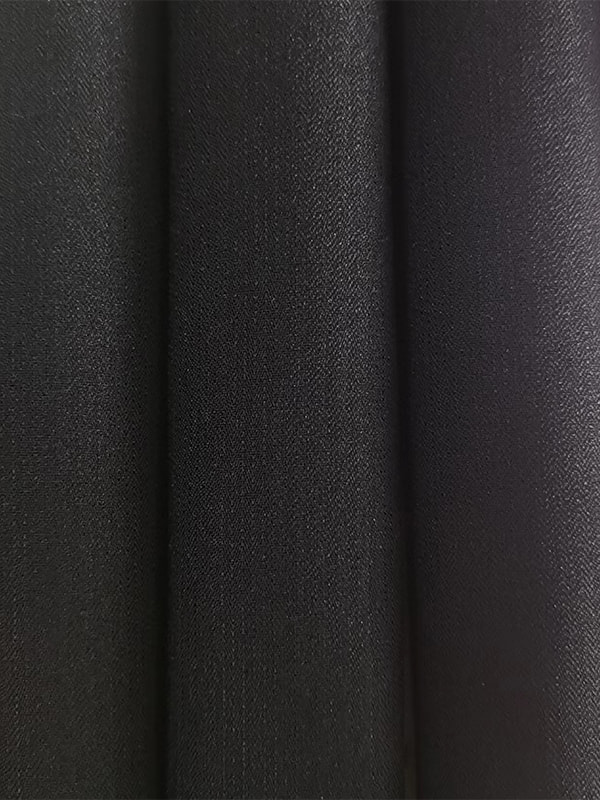
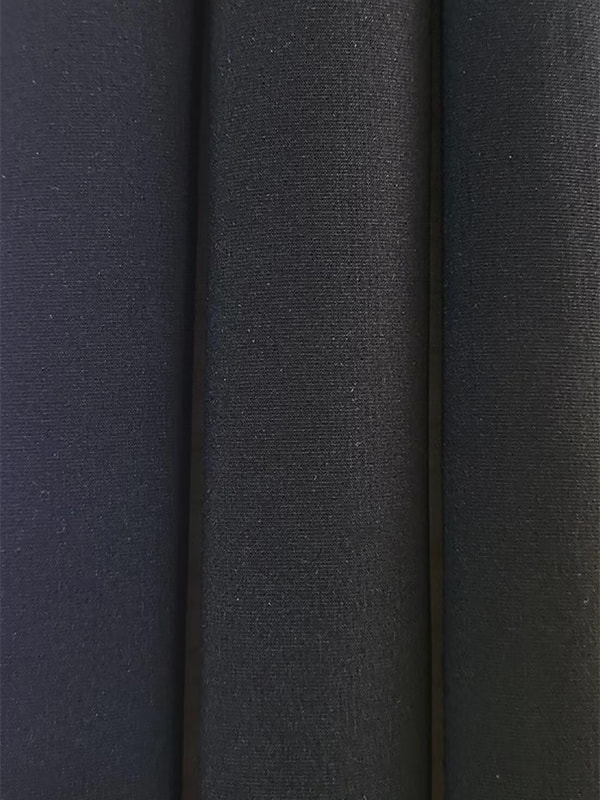
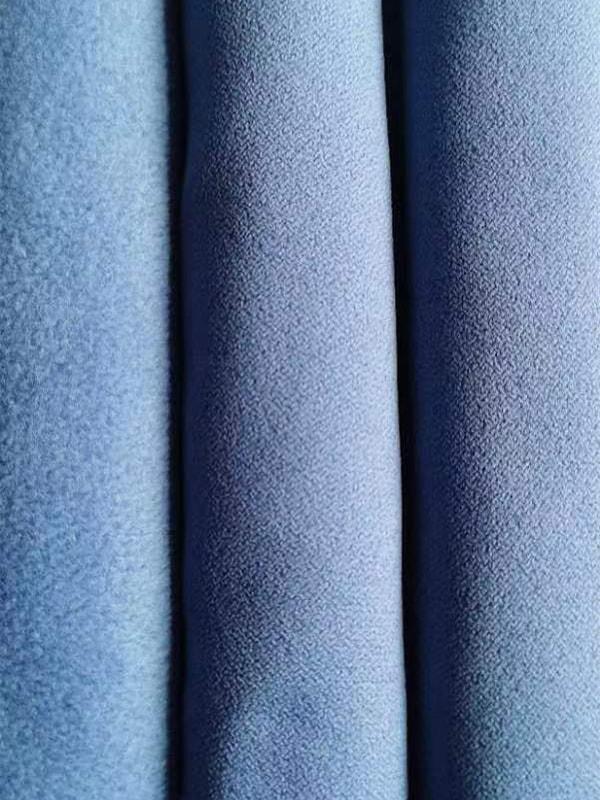
A good example of this construction is a double-layer T800 shell with a low-transparency TPU membrane, designed for outerwear that must survive frequent washing.
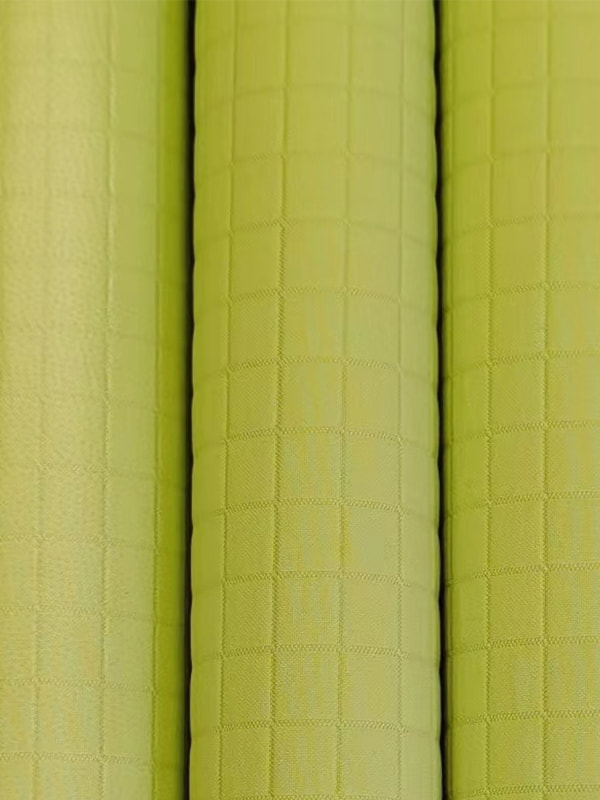 75D Dull T800 Double-Layer Stretch Fabric with Low-Transparency TPUThis double-layer shell combines mechanical stretch with a low-transparency TPU membrane, built to resist frequent washing while keeping a stable shape for durable outerwear.View Product →
Key Mechanisms Behind Long-Term Shape Retention
Shape retention is not the result of one single factor. Instead, it comes from several mechanisms working together across the fiber, yarn, and fabric levels.
Fiber-Level Crimp Memory
The bi-component crimp in T800 yarn gives the fiber a built-in memory. When heat-setting fixes the crimp, the fiber will always return to that coiled shape after deformation. This is different from mechanical stretching or added spandex, which tends to degrade over time.
Dense Fabric Construction
T800 fabrics are often woven with high cover factor, tight interlacing, and structured weaves such as twill, oxford, or double-layer designs. A dense construction limits yarn mobility, so washing agitation cannot easily distort the fabric plane. It also reduces the local stress concentration that causes bagging at knees and elbows.
Controlled Weaving Tension
Even the best yarn will become unstable if it is woven with uneven tension. Consistent warp and weft tension creates a balanced fabric that shrinks evenly during finishing and washing. Uneven tension, by contrast, creates hidden stress that appears later as skewing and wrinkling. This is why vertical production control matters.
In short: T800 shape retention is generated by the yarn, maintained by the weave, and stabilized by the finishing process.
The Role of Heat-Setting and Finishing in Dimensional Stability
After weaving, grey fabric is still full of internal stress. Heat-setting is the critical step that turns good yarn geometry into stable fabric geometry. During heat-setting, the fabric is held at a controlled width while heat relaxes the polyester molecules and sets the crimp in a fixed pattern. If the temperature, dwell time, and width are correctly matched to the fabric structure, the resulting textile has low shrinkage and high dimensional stability.
Wet-finishing steps also contribute. Pre-shrinking reduces relaxation shrinkage before the fabric reaches the garment factory. Surface finishing such as brushing or sueding must be done without distorting the weave. When a low-transparency TPU film is laminated to the fabric, it adds a physical barrier that limits water penetration and prevents the yarns from swelling in the wash. This combination of heat-setting, pre-shrinkage, and membrane lamination is what makes a fabric survive 50+ industrial laundry cycles.
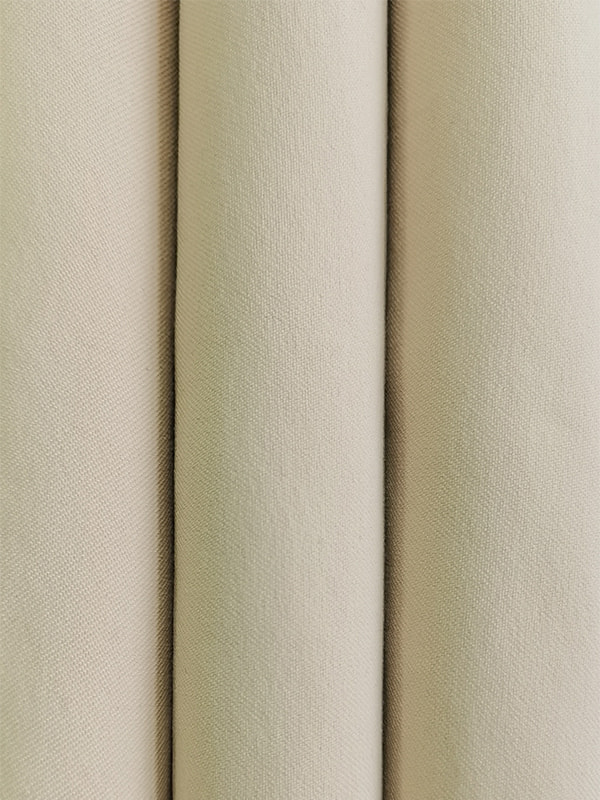
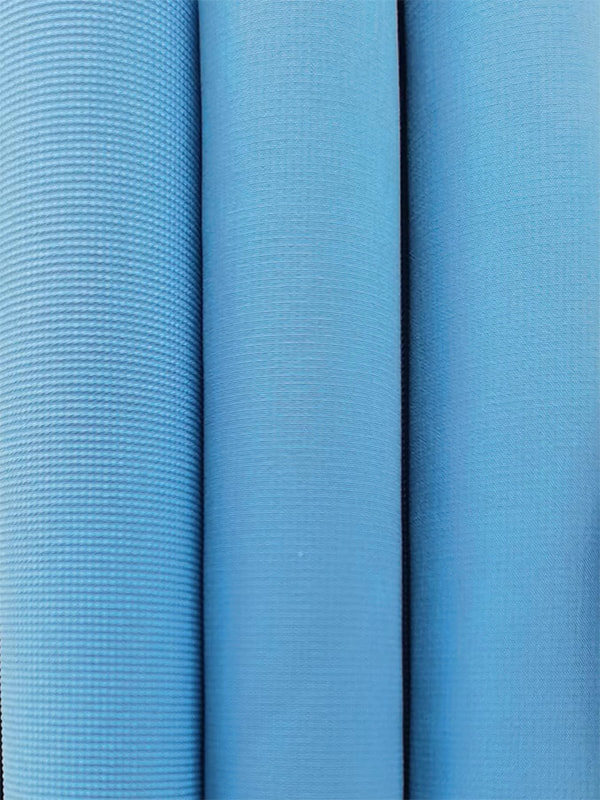
For demanding programs that require a structured yet drapeable material, a bamboo-touch 2/2 twill T800 fabric with low-transparency TPU can offer both comfort and stability.
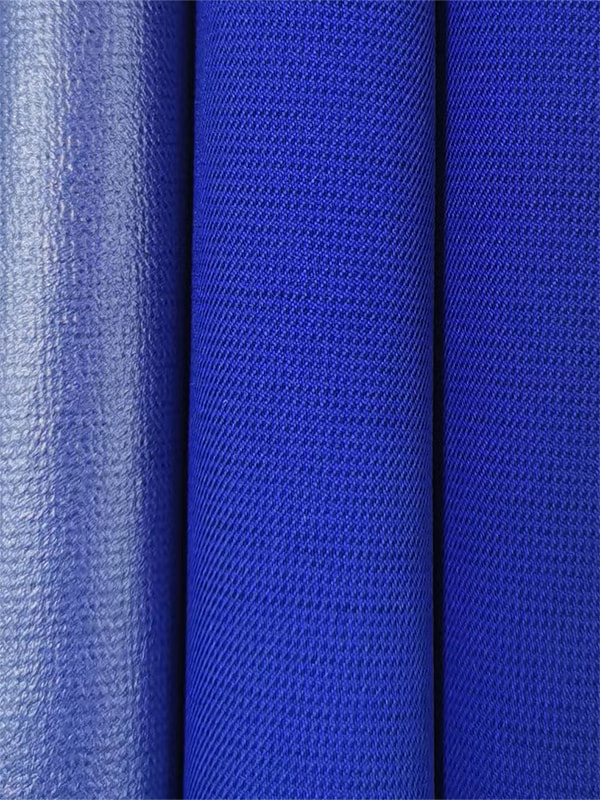 150D Dull 2/2 Twill Bamboo T800 Stretch Fabric with Low-Transparency TPUA bamboo-touch twill weave with T800 stretch and low-transparency TPU offers structured drape and comfort, suitable for demanding programs requiring durable shape retention.View Product →
What 50+ Industrial Laundry Cycles Actually Means
Industrial laundry is more aggressive than home washing. Typical industrial cycles use water temperatures between 60 and 75 °C, alkaline detergents with pH above 10, high extraction speeds, and tumble drying at elevated temperatures. Fifty cycles is a practical benchmark because it represents two to three years of service in a hotel, hospital, or uniform rental environment.
To pass this test, a fabric must show limited shrinkage, low twisting, acceptable wrinkle recovery, and stable hand feel. The following table summarizes typical performance values that can be expected from a well-constructed and properly finished T800 stretch fabric.
| Property | Common Test Method | Typical T800 Result |
|---|---|---|
| Dimensional change | AATCC 96 | Max 2.5% after 50 cycles |
| Twisting / skewing | Internal visual measurement | Max 3% after 50 cycles |
| Wrinkle recovery | AATCC 66 | Grade 3.5 or higher |
| Elastic recovery | Cyclic extension test | Min 90% recovery after stretching |
Actual results will vary with fabric weight, weave, finishing formula, and the specific wash protocol, but these values indicate the level of performance that T800 can provide when engineered for durability.
Why Industrial Laundry Destroys Ordinary Fabrics
Conventional fabrics fail in predictable ways during industrial laundry. Cotton-heavy fabrics swell and relax in hot alkaline liquor, causing shrinkage and bagging. Spandex-blended fabrics lose their elasticity because polyurethane is hydrolyzed by bleach and high pH. Weakly entangled textured yarns can slip under mechanical stress, leading to twill lines that skew and pockets that distort.
T800 avoids these failure paths. Its polyester chemistry is inherently resistant to hydrolysis and oxidation, so the fiber itself does not break down in the wash. The bi-component crimp provides a mechanical spring response that does not depend on chemical crosslinks, which means elasticity survives the alkaline environment. The fabric's dimensions are protected by its dense construction and, in many cases, by a TPU membrane that keeps moisture and detergent away from the core of the yarn.
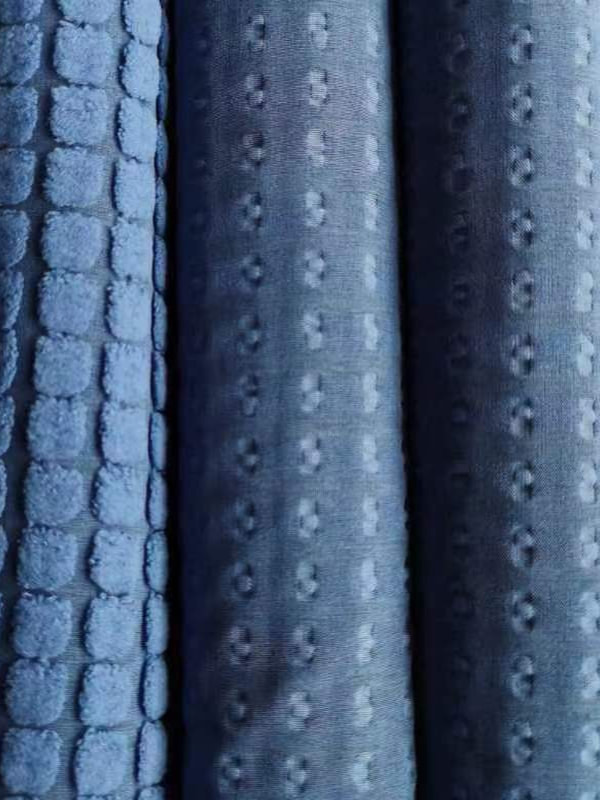
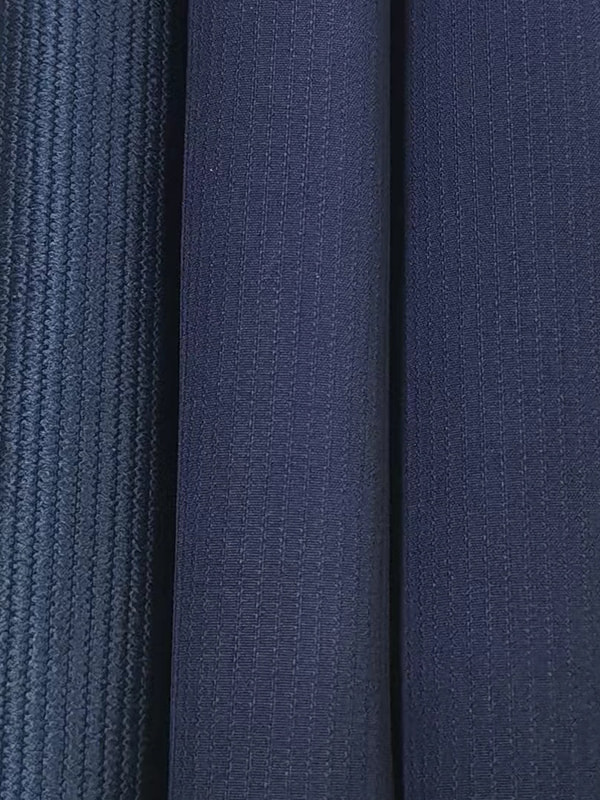
One example is a lightweight checkered T800 fabric with a low-transparency TPU layer and floating yarn texture, suitable for garments that need a tailored look after repeated laundering.
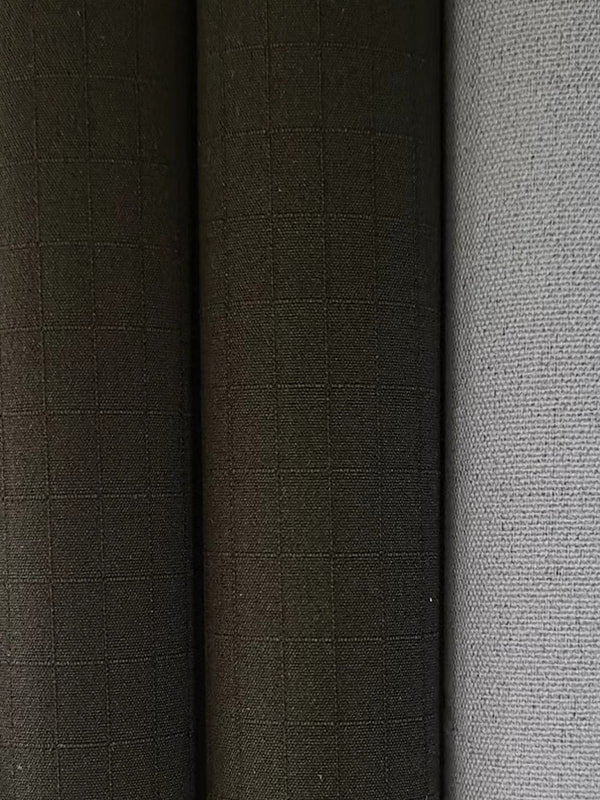 50D Checkered Weft T800 Stretch Fabric with Low-Transparency TPU and Floating YarnA lightweight checkered fabric featuring weft T800 stretch, a low-transparency TPU layer, and floating yarn texture, designed for tailored garments that must hold shape through repeated laundering.View Product →
Choosing the Right T800 Fabric for Your Program
Selecting a T800 fabric for industrial-use garments requires more than looking at stretch percentage. Buyers should evaluate the fabric weight, weave pattern, finishing formula, and whether a membrane is necessary. A 75D double-layer shell with TPU film will behave differently from a lightweight 30D lining. The cleaning conditions used by the end customer are also important: a hospital in one region may use different detergents or drying temperatures than an industrial laundry in another.
Ask suppliers for wash-test evidence that matches your own process. The laboratory reports should include dimensional change, skewing, and appearance rating after at least 50 cycles. If possible, run a pilot laundry test with real garments to verify that seams, zippers, and pocket bags behave as expected.
At Suzhou Redcolor International Trading Co., Ltd., T800 fabric development runs from yarn texturizing and weaving to dyeing, finishing, and membrane lamination in the same integrated supply chain. This vertical approach gives our technical team direct control over tension and heat history, which is exactly what consistent shape retention depends on. For a more detailed look at performance and breathability, see our T800 stretch fabric deep-dive guide.
Frequently Asked Questions
Q1: Can T800 fabric be washed with chlorine bleach?
T800 has better chlorine resistance than spandex, but repeated bleach exposure can still affect color and surface finish. For critical programs, use bleach-stable dyes and confirm performance with a trial wash test.
Q2: Does shape retention depend on fabric weight?
Fabric weight influences drape and recovery speed, but shape retention is more strongly determined by yarn crimp level, weave density, and heat-setting quality. Lightweight and midweight T800 fabrics can both pass 50 wash cycles when designed correctly.
Q3: Can T800 fabrics be tumble dried after industrial washing?
Most T800 fabrics can be tumble dried at moderate temperatures. Drying temperature should be controlled, and we recommend validating the specific fabric's heat tolerance in your laundry process before mass production.
Shape retention after 50+ industrial laundry cycles is not a lucky accident. It comes from a deliberately engineered bi-component yarn, a stable woven construction, a correctly controlled heat-setting process, and a finishing route that protects the fabric from moisture and mechanical stress. T800 fabrics built on these principles deliver longer garment life, fewer customer complaints, and lower total cost for workwear, uniform, and protective clothing programs. When evaluating a new fabric, always review real wash-test data and, if possible, test the material under your own laundry conditions.
Contact Us for More Details
Don't hesitate to contact when you need us!

Product Categories
Contact Information
-
NO.1 Huanhu Road(Building I)Pingwang, Wu Jiang, Suzhou, Jiangsu, China
-
+86-13962557213
-
+86-512-80739991-801
-
+86-512-80739990
